Written by: Kelly Nguyen and Buchizya Mwase
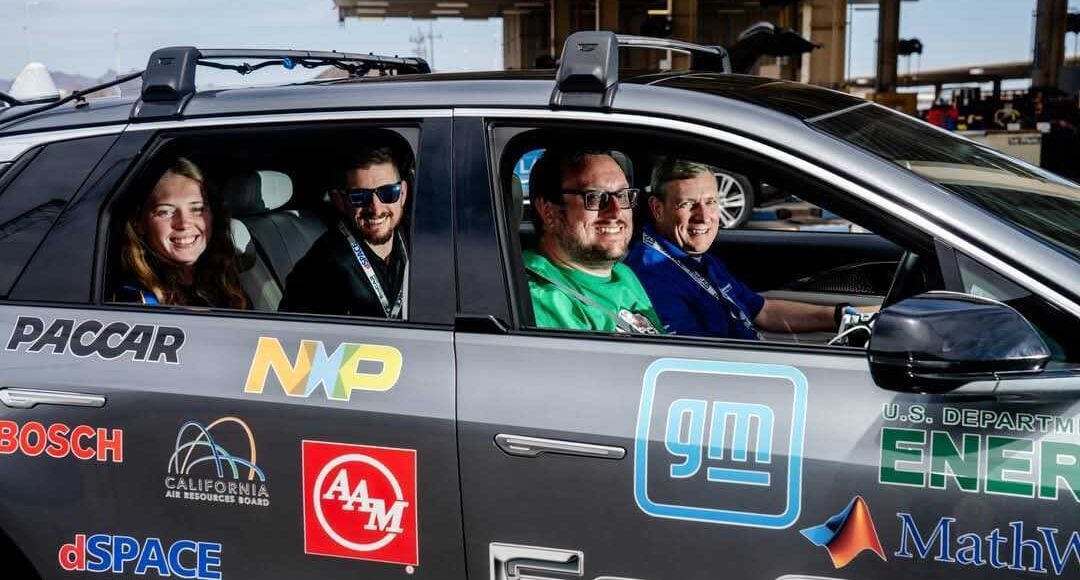
Advanced Vehicle Technology Competitions (AVTCs) prepare students for the real world by combining hands-on engineering with teamwork, reporting, and professional communication. Tom Georgia credits this unique experience for helping him transition from an EcoCAR student competitor to a successful engineer at General Motors. Today, he gives back by mentoring EcoCAR student engineers and leaders for the Embry-Riddle / Bethune Cookman team.
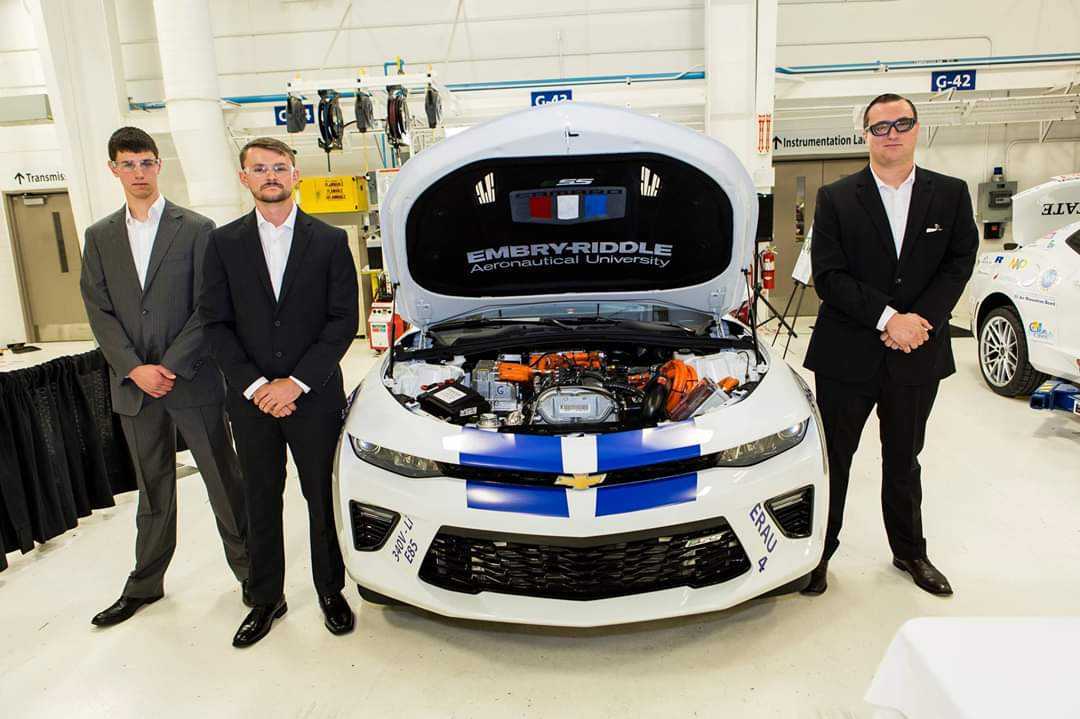
Tom’s connection to EcoCAR started early. He joined the Embry-Riddle’s EcoCAR 2 team in 2011 as a freshman and immediately began traveling to workshops and competitions, eventually spending six years in the program across two full competition cycles. During that time, he participated in EcoCAR 2 and EcoCAR 3, gaining experience across multiple phases of vehicle development and team leadership. Throughout EcoCAR 2 (2011-2014), Tom focused primarily on mechanical integration work while also contributing to some electrical integration. By EcoCAR 3 (2014-2018), his responsibilities expanded significantly. Tom served as the technical lead for three years and supported a little bit of everything, including controls, electrical, hardware, and software. This shift from hands-on integration to technical leadership gave him a broad systems perspective, one that mirrors how engineering teams operate in industry.
The visibility of this leadership extended beyond the competition itself. Embry-Riddle’s EcoCAR Camaro was later featured by Jalopnik, where Tom was referenced discussing the vehicle’s hybrid architecture and the reasoning behind key engineering decisions reflecting his time in EcoCAR was not just about building a vehicle, but about justifying design choices.
When asked what he learned from the AVTCs that has been most valuable in his career, Tom pointed to something many students don’t initially expect: communication. As he explained, one thing that sets EcoCAR students apart is their ability to communicate—especially when it comes to translating complex technical challenges to audiences with different areas of expertise. Through presentations, reports, and constant documentation, EcoCAR students gain extensive experience explaining their work clearly and effectively. These deliverables help train students to communicate efficiently, a skill that becomes essential in professional engineering environments.
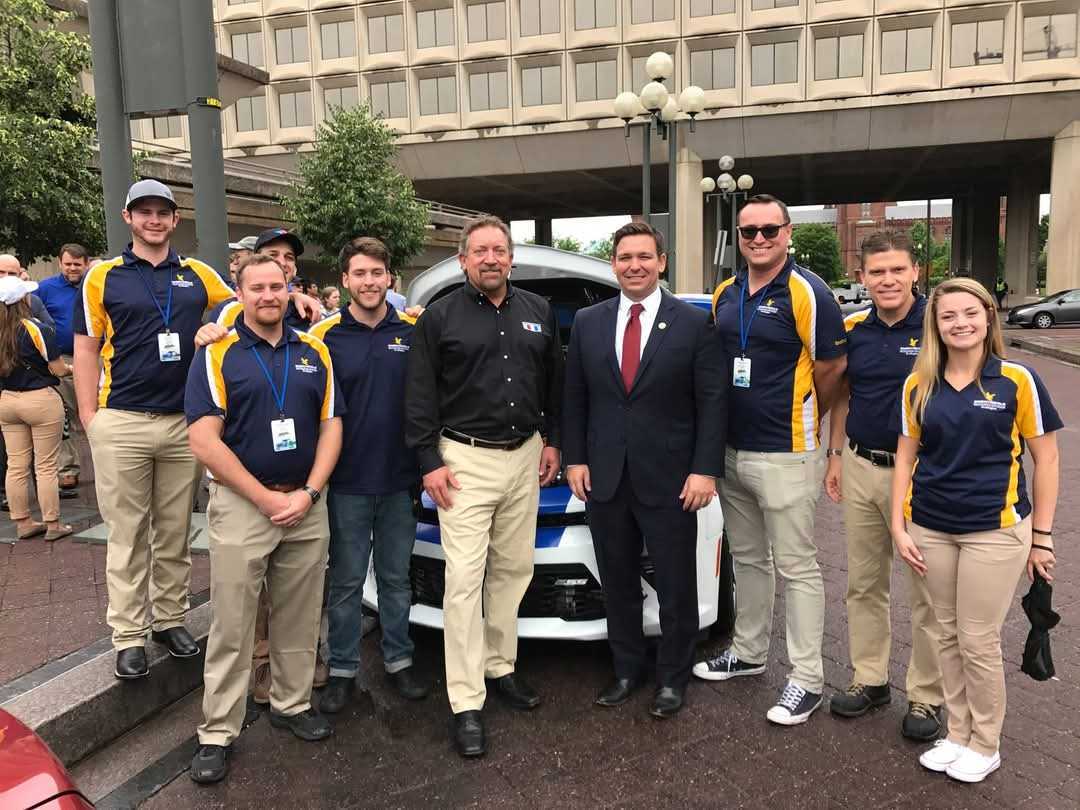
“One of the most valuable skills I gained in EcoCAR isn’t something you notice at first—it’s communication. Through presentations, reports, and constant documentation, you learn how to clearly explain complex technical work to people with different expertise. That skill has been just as important in my career as the engineering itself.” He also highlighted that EcoCAR trains students to explain not just what they did, but why they did it, a skill highly valued by industry leaders. “It’s not just about building a car; it’s about understanding why you’re building it,” he added. That approach has carried directly into his career, where he routinely translates complex technical challenges for teams and leadership alike.
Tom currently works as a warranty systems engineer supporting a first-generation battery electric architecture at GM, working directly for the chief engineer. He described his day to day as “very varied,” centered on translating system-level concerns into actionable tasks across multiple teams so that issues can be investigated and resolved efficiently. He also emphasized how important quality is in his role, since early issues can impact customer trust and long-term product performance.
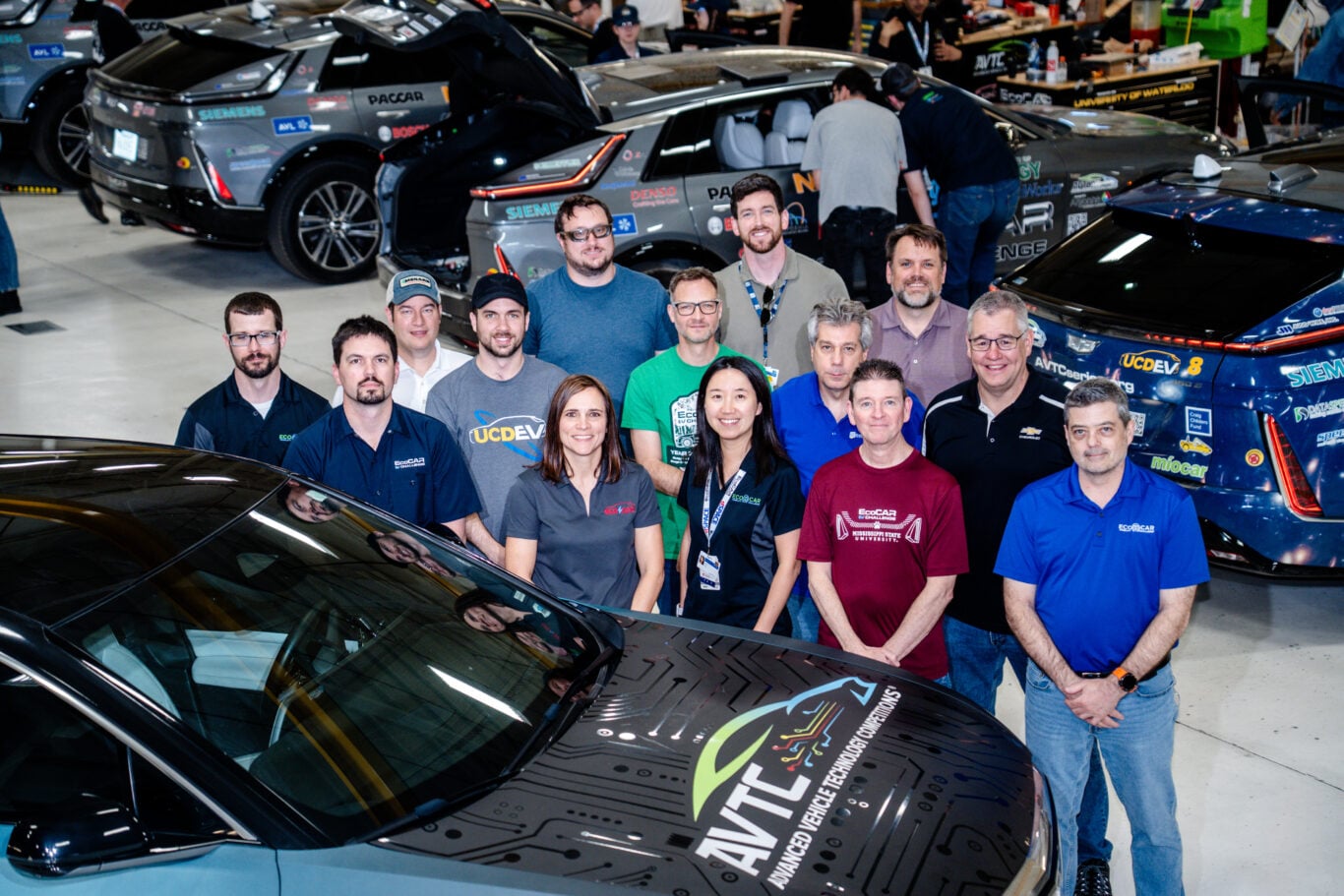
Tom’s story is a clear example of how AVTC experiences can shape a career path. EcoCAR built his technical foundation, but it also prepared him to work within industry processes. He described it as learning “what you don’t get in the classroom,” and building the network that continues to support him professionally. That same commitment to growth and community is why Tom chose to return to EcoCAR as a mentor. He explained that he had two mentors as a student and that the lessons they taught him stayed relevant throughout his career at GM.
As he progressed professionally, his motivation shifted from building his own skills to helping others develop theirs. “Now that I’m further in my career, it’s not about growing my ability, it’s about growing others.”
Tom’s path from student competitor to GM engineer highlights the purpose behind the AVTCs, developing talent, building confidence, and producing engineers who can deliver. His story reinforces a message EcoCAR teams experience every year, the most valuable lessons are often the ones you don’t notice until later, like communication, justification, collaboration, and the ability to connect technical work to real-world impact.