Written By: Venkata Yagna
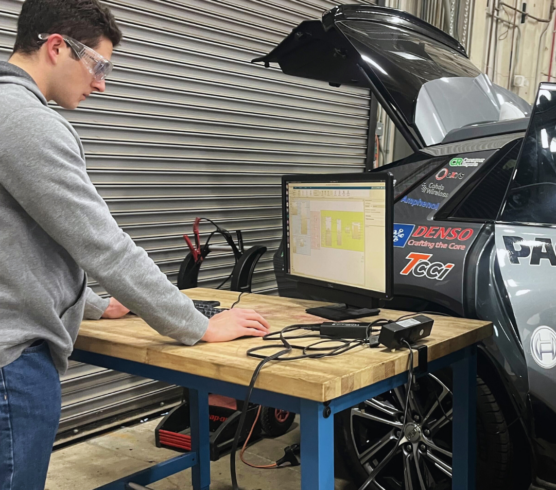
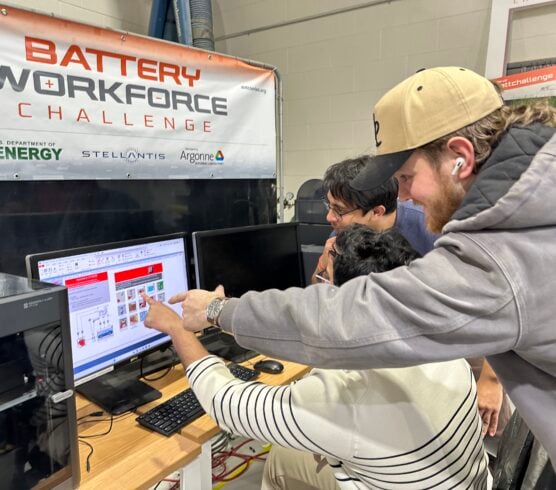
Within the teamwork labs of Clemson University and Greenville Technical College, the Battery Workforce Challenge group is striving to achieve a collective vision, which is to develop a battery pack that is not only powerful but also smart. Although the physical aspects are usually the focus, a large part of the innovation is initiated in a virtual world with MathWorks tools.
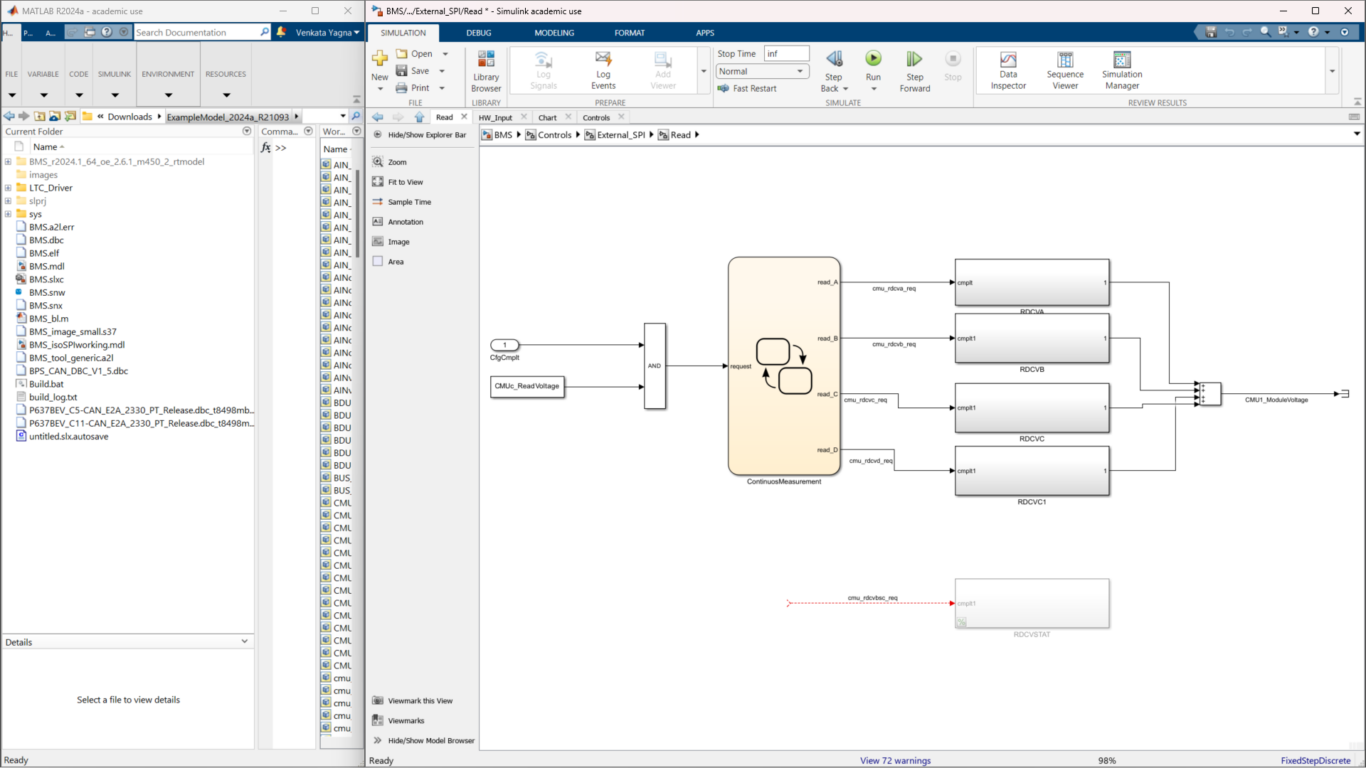
Students use MATLAB and Simulink primarily as a development environment to build and organize the graphical programming architecture of the battery system. Instead of relying on simulations, the team focuses on implementing control logic, signal flow, and software workflows directly within Simulink. This approach allows them to structure the Battery Management System code clearly, refine functionality iteratively, and ensure that different components of the software interact as intended before deployment of hardware.
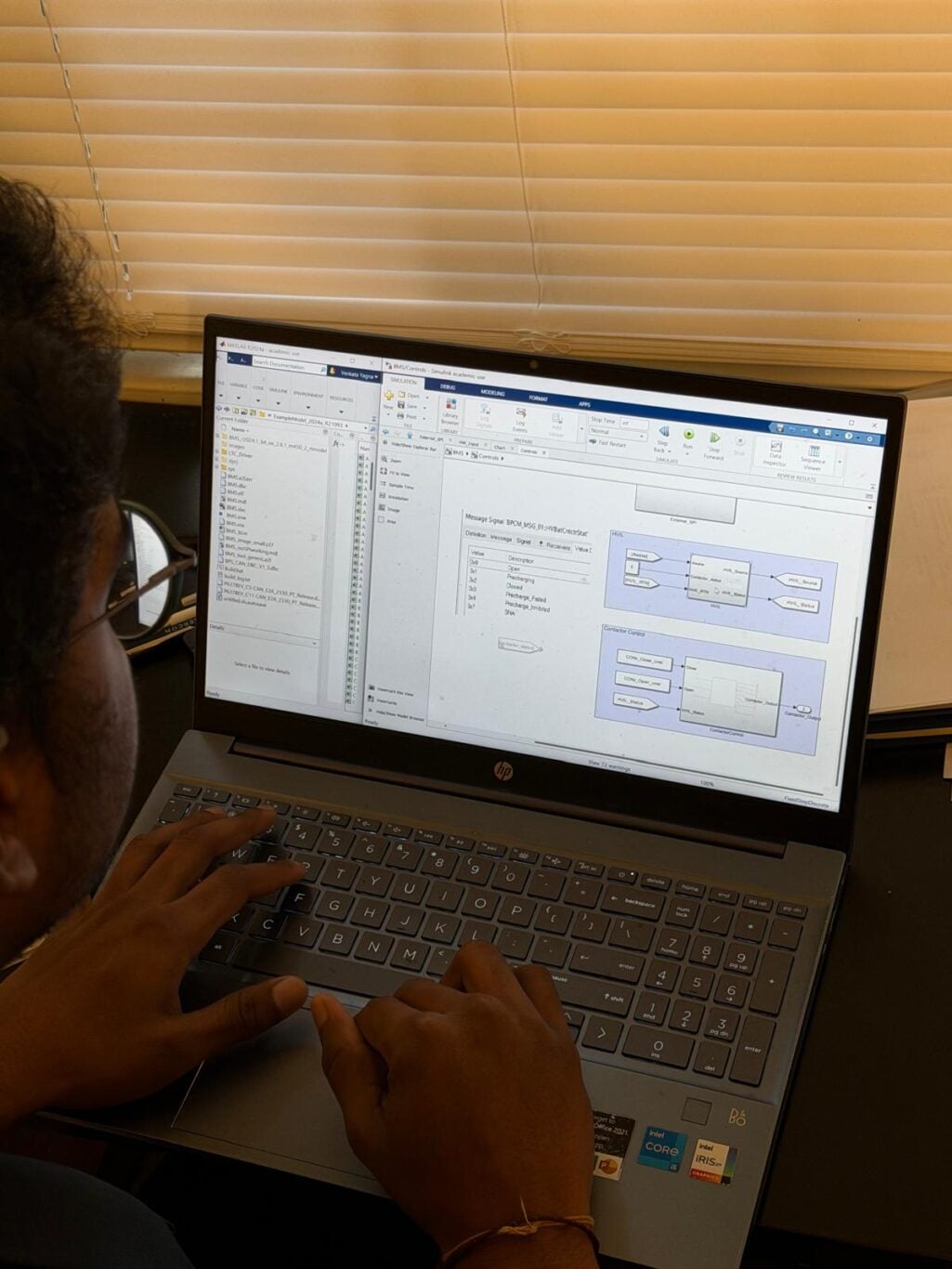
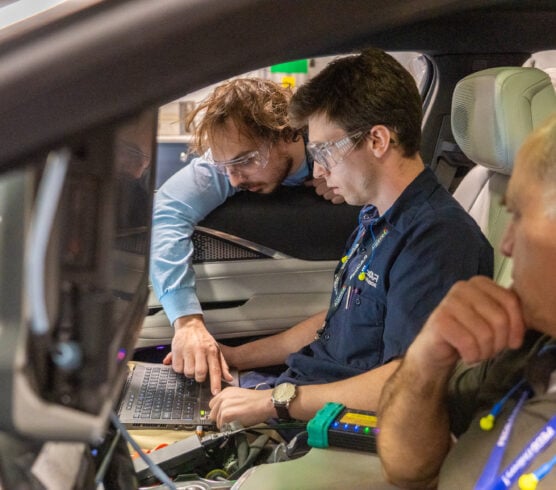
The main focus of this work is the creation of the Battery Management System (BMS) – the computer of the battery pack. The team has to develop and deploy the logic to monitor cell voltages, balance strategies, and fault detection, as well as to provide safe operation in the presence of a different load. Showing the control algorithms and communication protocols developed in MATLAB and Simulink on a controlled hardware, students are able to prove the validity of these programs and procedures before implementing them on the physical hardware. This will not only enhance the level of reliability but will also help in speeding up the entire cycle of development.
Simulation models were useful to get an idea of the change in behavior of the battery under various conditions. The use of modeling to simulate the voltage characteristics and the protection scenarios contributed to a more credible presentation of the system interactions and, therefore, a fine-tuning of design choices.
Krish Patel has taken a couple of semesters to design the pack’s software architecture. He has experienced the difference between developing control logic and validating system responses. The integrated modeling environment makes the development process easier, and he has found it to be an excellent way to align the team across disciplines.
Venkata Yagna has used MATLAB outside the classroom to transform his theoretical knowledge into practical engineering work. Application of simulation and data analysis to the solution of systems enhanced his technical confidence as well as his knowledge of the system-level design.
Skills in Driving for the Future:
The experience with MathWorks tools is much more than this competition. Students are also developing realistic skills through the process of BMS development, system modelling, and testing in an iterative manner, reflecting the work processes within the industry. These will equip them with the ability to work in the quickly developing electric vehicle market, as software design is now essential and even a vital factor in hardware development.
The importance of modeling and simulation will not change as the team keeps improving the battery pack, as it will allow making more intelligent choices, make the whole process faster, and gain a better insight into how complex energy systems can be assembled.