Written by: Lisé Badeaux
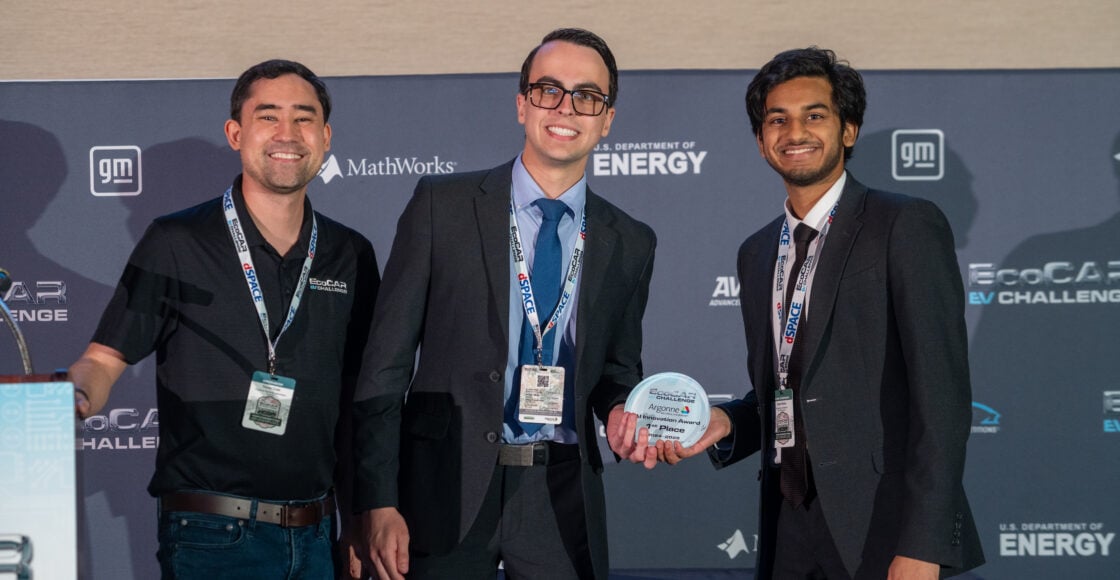
The University of Alabama EcoCAR team made major strides this competition by combining classroom knowledge, hands-on engineering, and forward-looking research. At the end of Year 3, the team earned the first ever Argonne AI Innovation Award for their project, Effects of V2V Adoption Rates on DDPG-Based Cooperative Adaptive Cruise Control for Electric Vehicles. Building on that recognition, they later presented their work to an international audience at the IEEE Transportation Electrification Conference (ITEC) in June.
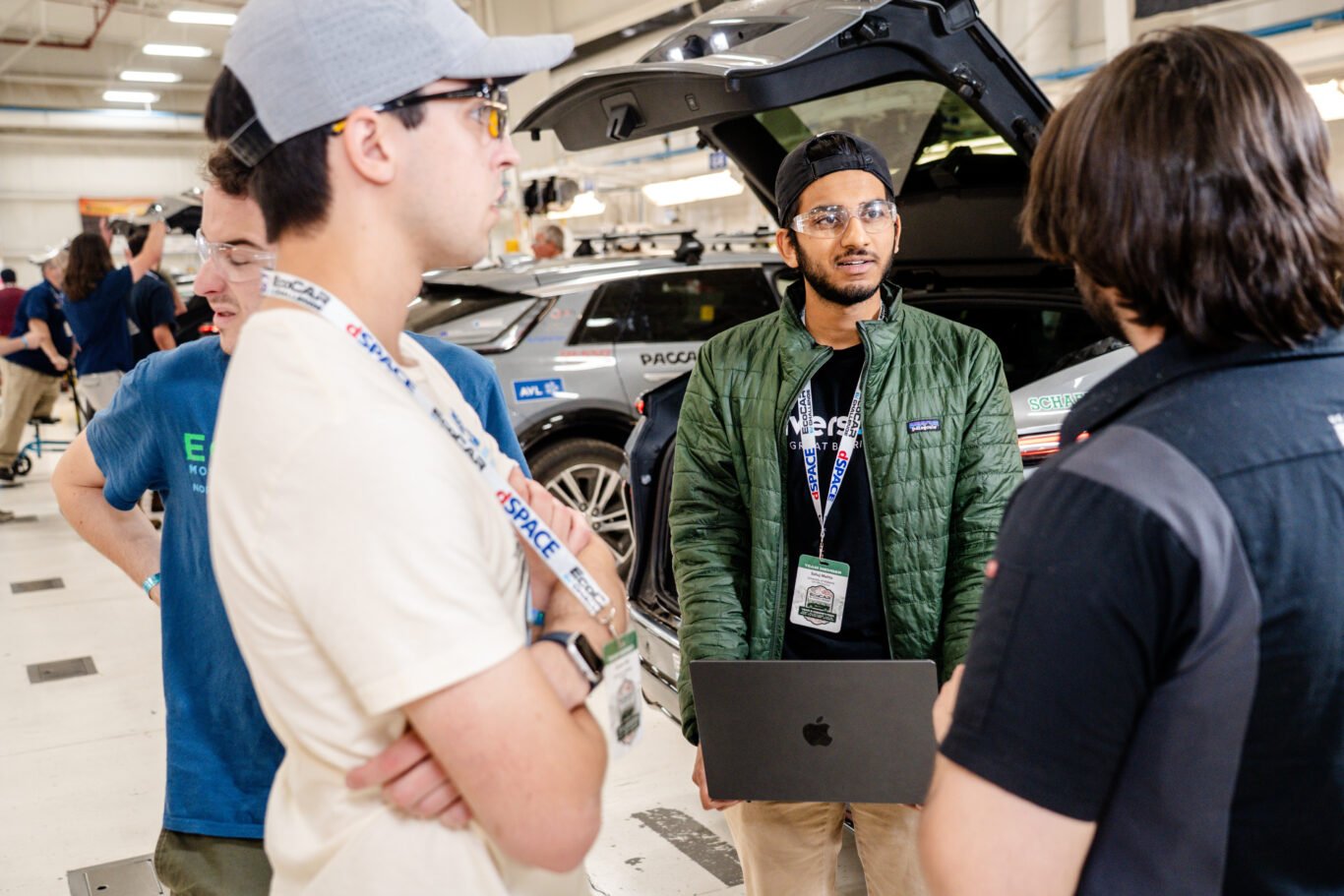
The research focused on Cooperative Adaptive Cruise Control (CACC), a technology that enables vehicles to communicate with each other (V2V) to coordinate their speeds more effectively and improve traffic flow. Unlike traditional cruise control, which only reacts to the vehicle directly ahead, CACC uses information from multiple vehicles to create safer and more efficient driving conditions. The UA EcoCAR team explored how varying levels of V2V adoption—both limited and widespread—influenced performance when paired with reinforcement learning through Deep Deterministic Policy Gradient (DDPG).
For Sahuj Mehta, Year 3 Connected and Automated Vehicles Lead, grounding the research was essential.
“Our goal was to test adoption rates at all levels,” Mehta said. “That’s the real challenge automakers will face. We had to overcome multiple challenges to make sure everything ran smoothly.”
Mehta emphasized adaptability as a key outcome.
“Everything in simulation is nice, but the real success is seeing it work on the vehicle,” Mehta explained. “For example, we knew we had limited information, but we severely underestimated just how much data we needed to get this up and running. We had to really use everything we had available to us.”
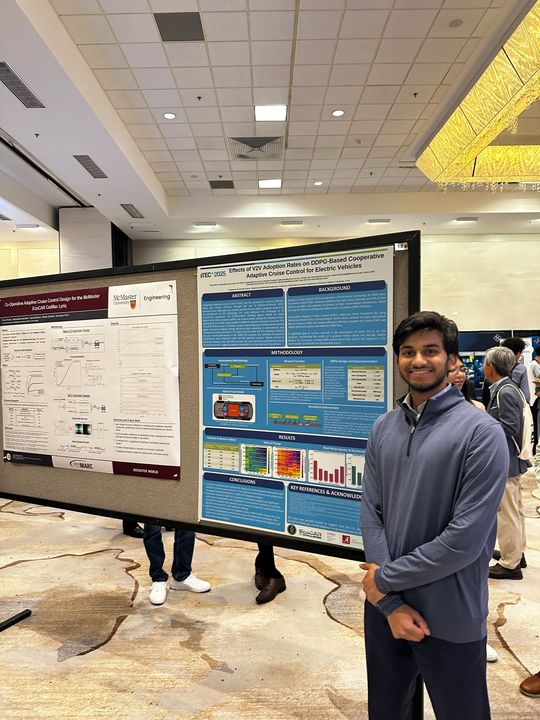
Winning the Argonne AI Innovation Award gave the team confidence and valuable feedback from leading AI experts from various EcoCAR sponsors. Presenting at ITEC extended that momentum, allowing the team to share their findings with researchers, engineers, and industry leaders from around the world.

Conner Hall, the Year 4 Project Manager and former CAV subteam member, helped present the research at the Year 3 Competition and spoke highly of what followed.
“The feedback we received from judges and sponsors throughout the competition helped us refine our software and prove it was safe and reliable for consumers,” Hall reflected. “It was amazing to even get the opportunity, and it gave us the ideas to kickstart Year 4.”
Looking ahead, the team plans to continue training reinforcement learning models and move beyond simulations into real-world testing on their Cadillac LYRIQ. This journey—from recognition by Argonne to an international stage at ITEC—underscores not only the technical progress of UA EcoCAR but also the professional growth of its students. Together, they demonstrated how innovative research and teamwork can drive the future of mobility forward.