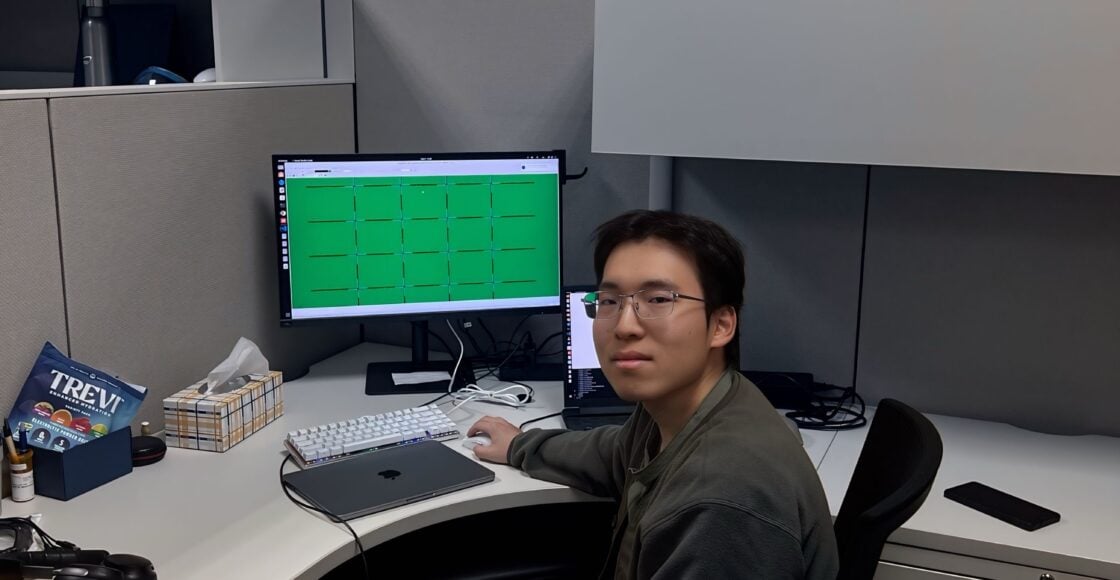
Written by: Semaria Kebede UC Riverside EcoCAR Communications Manager
At UC Riverside, Ziyan Zhang, a third-year PhD student in Electrical and Computer Engineering, is focusing his research on intelligent, network-level traffic flow control for mixed traffic environments.
Zhang conducts his research through UC Riverside’s Center for Environmental Research and Technology (CE-CERT), where his work centers on intelligent transportation systems (ITS) and AI-enabled mobility solutions and how traffic systems can be optimized at a city-wide network level.
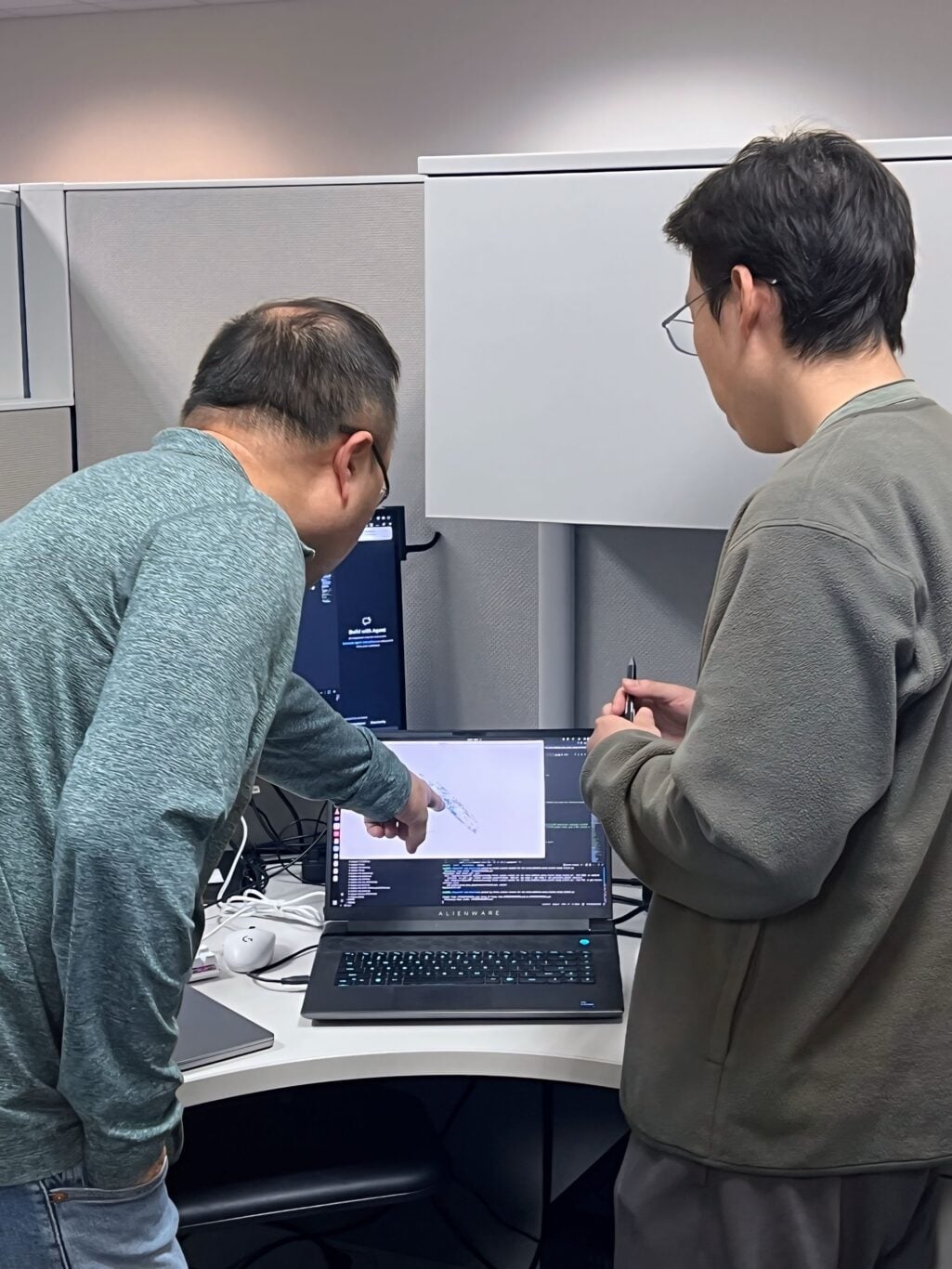
At the core of Zhang’s research is a hierarchical traffic control framework. The first layer focuses on smart signal control at intersections, using real-time data from connected vehicles, sensors, and neighboring intersections to dynamically adjust signal timing. Unlike static or pre-timed signals commonly used today, this adaptive approach responds to actual traffic demand, reducing unnecessary stops and congestion.
The second layer focuses on vehicle trajectory planning for CAV, allowing automated vehicles to adjust their speed and movement in advance based on upcoming signal timing. By coordinating these two layers, vehicles can pass through intersections more smoothly, reducing idling, improving travel time, and lowering energy consumption.
“Our goal is to enable vehicles to move through intersections without unnecessary stopping while saving time and improving efficiency,” Zhang said.
Zhang’s findings show that as the proportion of connected and automated vehicles increase, overall system efficiency, mobility, and energy savings improve while still accounting for unpredictable human driving behavior.
To evaluate these impacts, Zhang uses advanced traffic simulation tools calibrated with real-world data. Key performance metrics include average vehicle speed, total energy consumption, and vehicle idling time, all normalized to allow fair comparison across different network sizes.
Looking ahead, he hopes his research will help the public better understand the tangible benefits of investing in smart intersection technology and connected infrastructure.
“If information can be shared across the system, we can reduce congestion, improve commuting, and make cities more efficient,” Zhang said.
By bridging advanced research with real-world applications, Zhang’s research highlights how system-level thinking and intelligent transportation technologies can play a critical role in mobility.
Want to learn more or get involved with EcoCAR UCR? Follow EcoCAR UCR on Instagram and LinkedIn and visit Linktree to explore opportunities, open roles, and behind-the-scenes updates from Year 4.