Written by: Kha Vi An Tran
At the forefront of automotive innovation, dSPACE empowers the next generation of engineers through its world-class simulation, validation, and development tools. As a global leader in embedded software and hardware-in-the-loop (HIL) testing, dSPACE has been trusted for more than three decades by automotive manufacturers, suppliers, and researchers to accelerate the journey from concept to production. Its comprehensive ecosystem of hardware and software allows engineers to design, simulate, and validate complex vehicle systems efficiently and safely, bridging the gap between classroom learning and real-world application.
Empowering Students through the EcoCAR EV Challenge
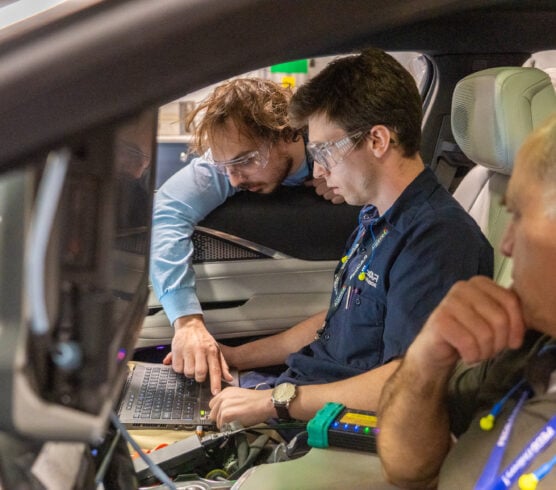
Through its partnership with the EcoCAR EV Challenge, dSPACE provides invaluable resources that give students hands-on experience with professional-grade technologies. For the University of Waterloo Alternative Fuels Team (UWAFT), dSPACE’s continued support has been instrumental in advancing the team’s Connected and Automated Vehicle (CAV) systems. By using industry-standard platforms, students develop both technical and professional skills that prepare them for success in the modern automotive workforce.
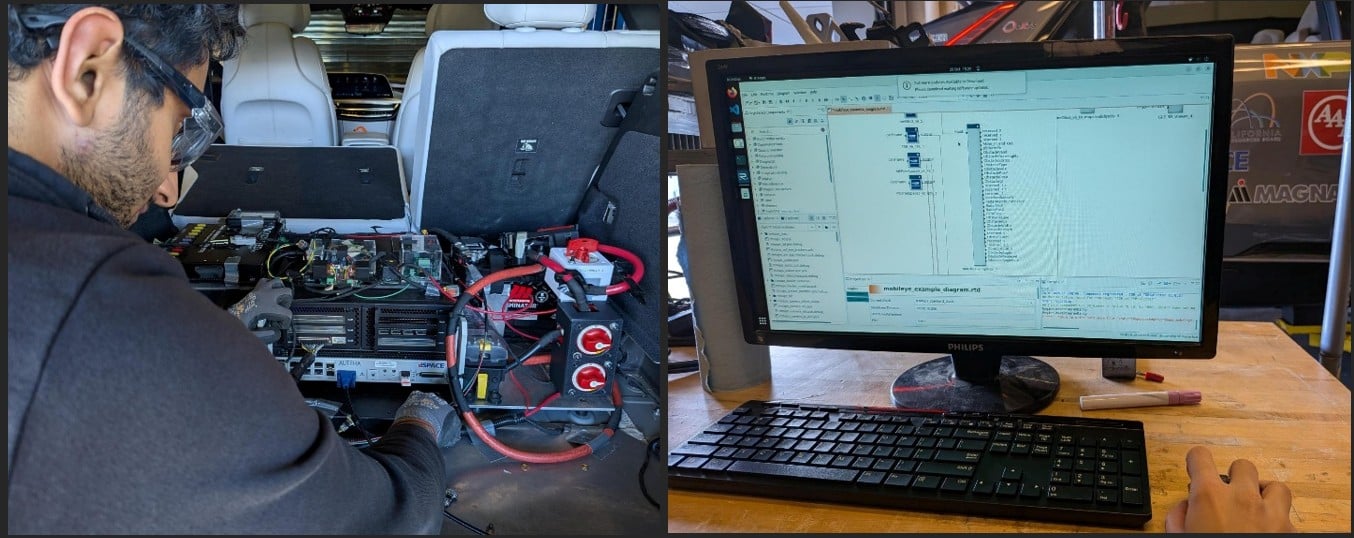
The partnership includes access to several of dSPACE’s flagship tools: ASM (Automotive Simulation Models) for vehicle modeling, AURELION for sensor visualization, ModelDesk and VEOS for scenario validation, and the AUTERA Compute Platform, a high-performance embedded computer that serves as the dedicated ADAS hardware in UWAFT’s vehicle. Central to these technologies is RTMaps (Real-Time Multisensor Applications), one of dSPACE’s most powerful and versatile software environments.
RTMaps in Action at UWAFT
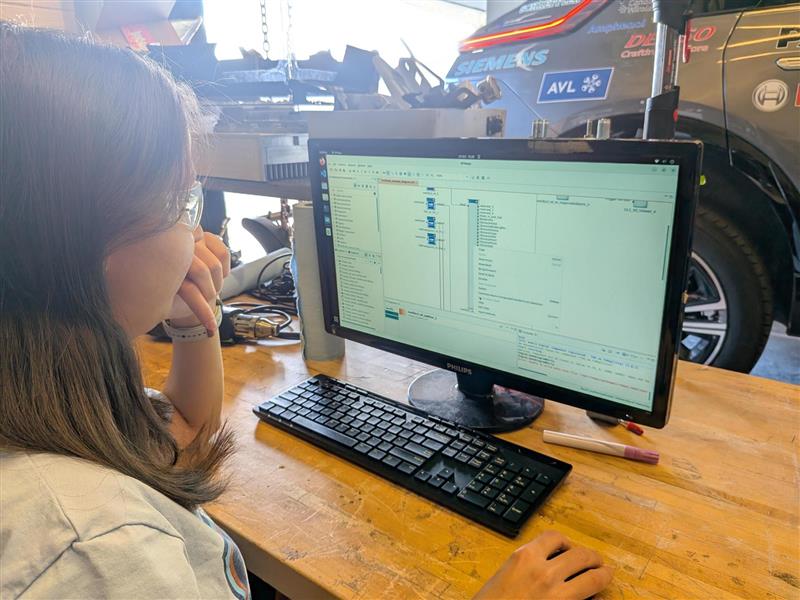
RTMaps is a component-based development environment used to build and deploy advanced driver-assistance systems (ADAS) and autonomous vehicle features. Its modular architecture allows seamless integration of multiple sensors, communication interfaces, and algorithms. One of its greatest strengths is its ability to process and synchronize large volumes of real-time data from LiDAR, radar, cameras, GPS, and vehicle buses with microsecond precision. This synchronization lets engineers analyze data collectively—essential for accurate perception and decision-making. Acting as the “central nervous system” of a multisensor environment, RTMaps collects, aligns, processes, and replays data with exceptional accuracy and flexibility with industry tools makes it indispensable for developing modern autonomous and connected vehicle technologies.
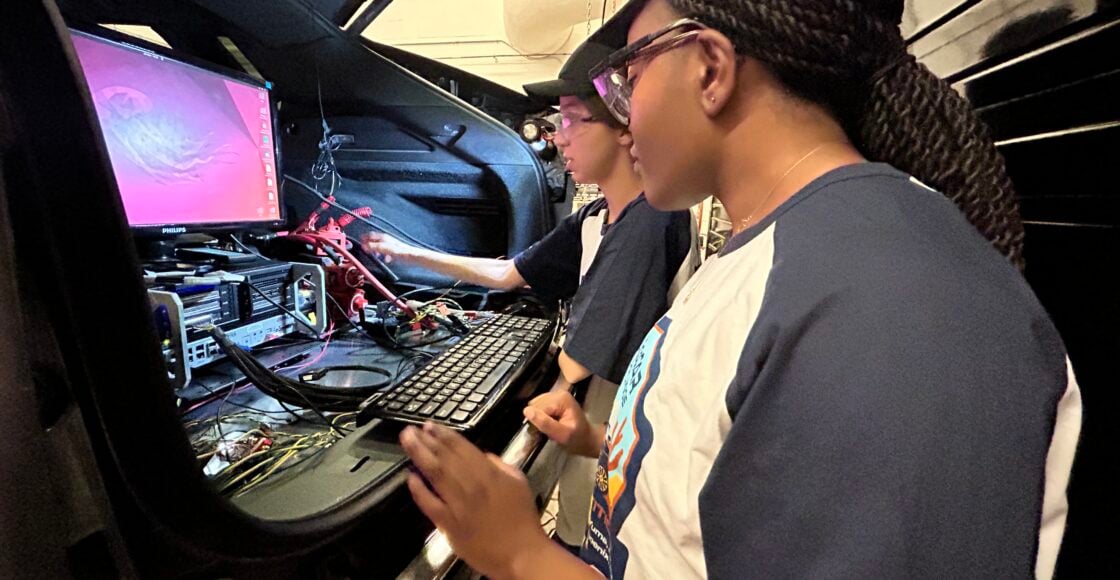
RTMaps supports programming and modeling tools such as Python, C++, and Simulink, allowing engineers to combine diverse workflows within one platform. This interoperability makes it ideal for rapid prototyping and testing—critical for student teams developing autonomous features under tight competition timelines. Within RTMaps, data can be visualized, algorithms validated, and systems deployed seamlessly to embedded platforms like dSPACE’s AUTERA.For UWAFT, RTMaps serves as the central hub for all CAV development. Combined with the AUTERA platform, it allows the team to design, deploy, and validate autonomous features in a safe, controlled environment. The ability to rapidly prototype, test, and refine systems using dSPACE technology has helped UWAFT push the boundaries of connected and automated vehicle design.
By equipping students with advanced simulation and automation tools, dSPACE continues to invest in the future of sustainable and intelligent mobility—empowering the engineers who will shape tomorrow’s automotive landscape.
To learn more about dSPACE and their groundbreaking technologies, visit: https://www.dspace.com