Written by: Rahul Baikadi
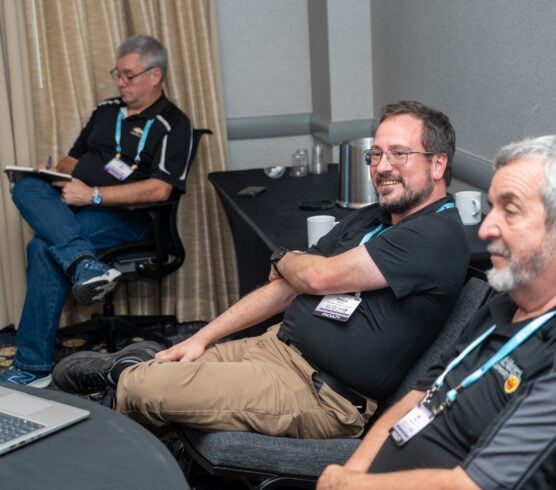
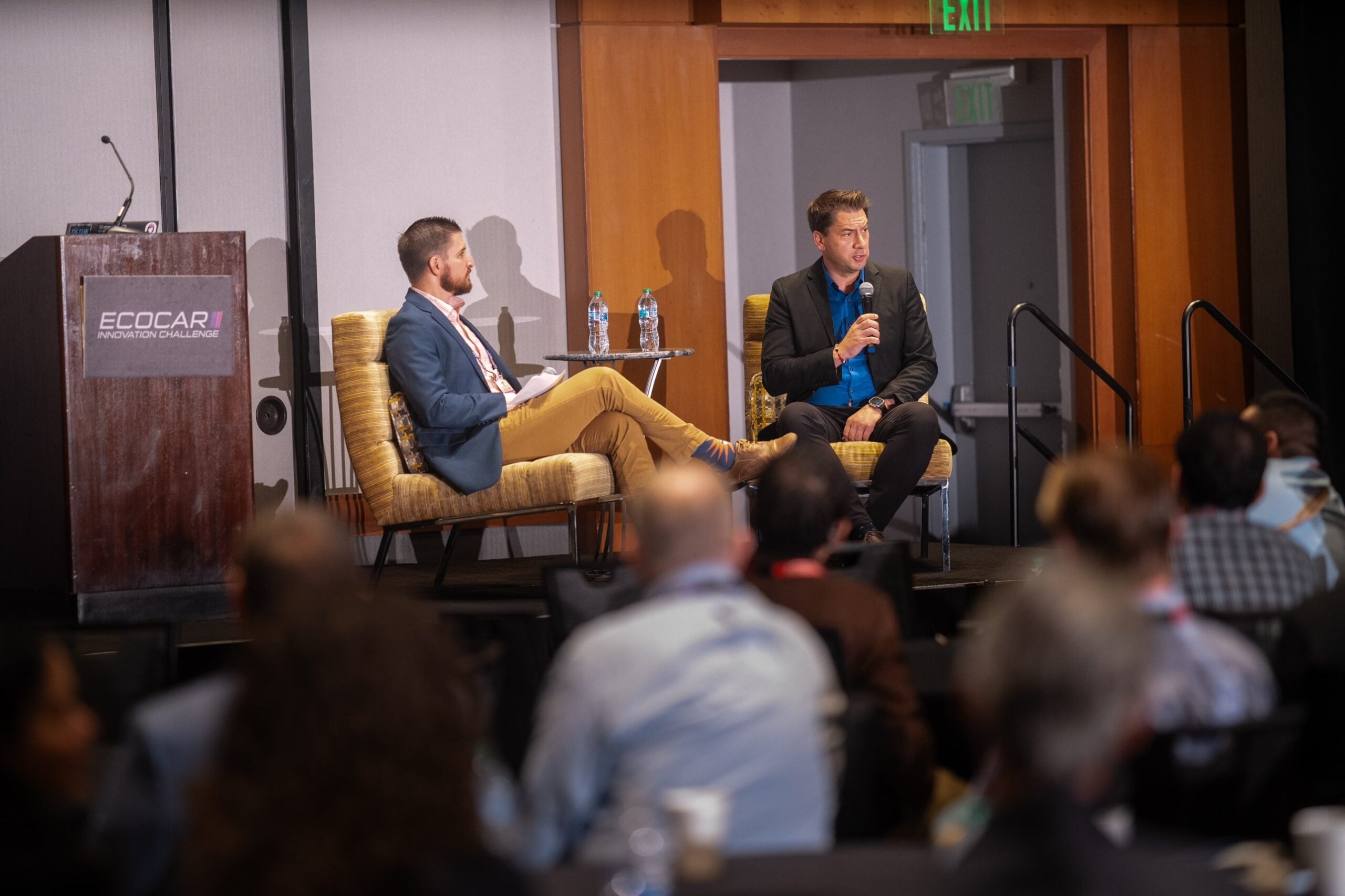
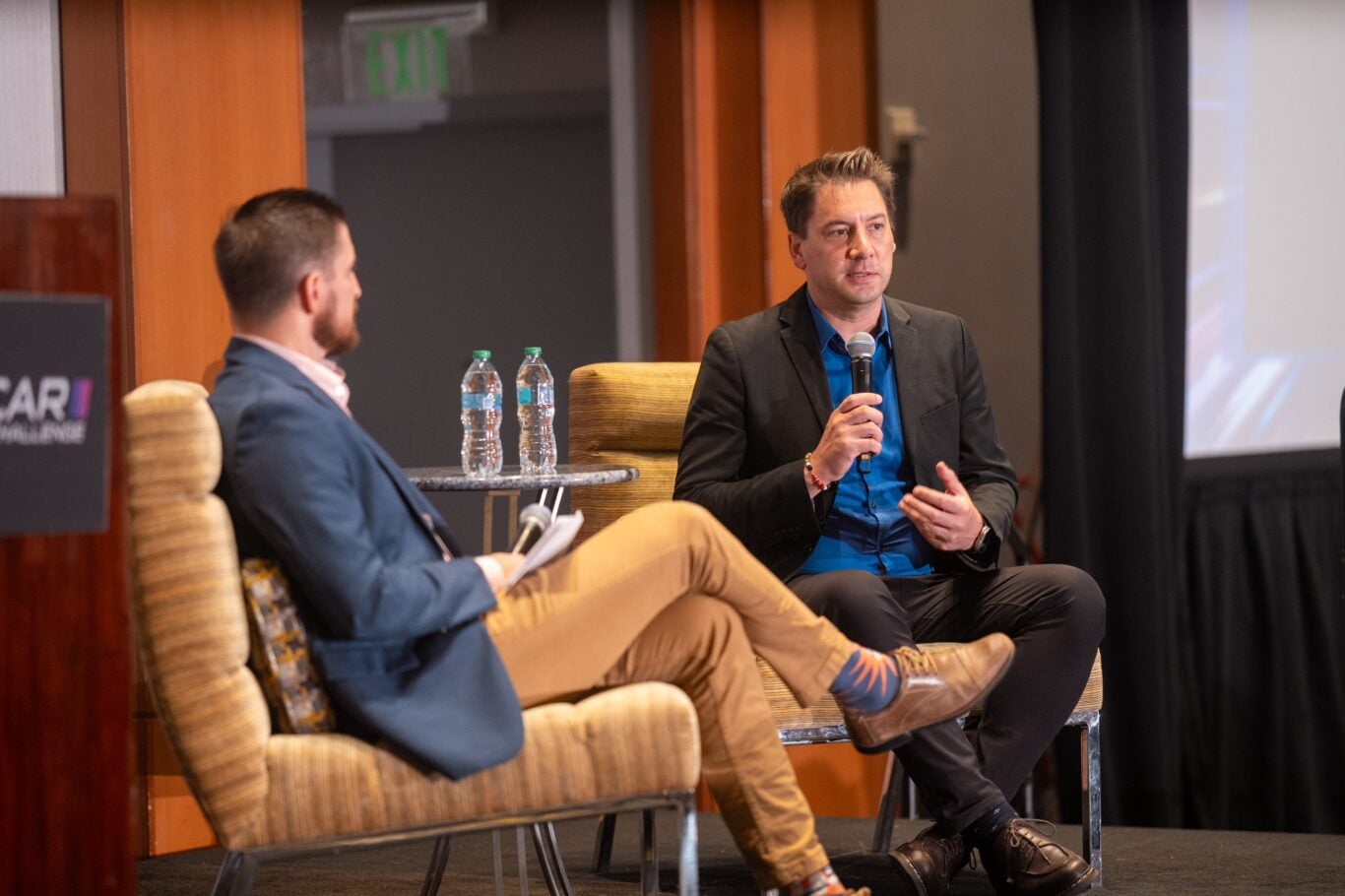
Every electric vehicle starts with a battery, and every battery starts with materials that have to come from somewhere. For the University at Buffalo EcoCAR Team, that question became much more real at this year’s Fall Workshop, where Ryan Melsert, CEO of American Battery Technology Company (ABTC), sat down for a fireside chat with students from across the EcoCAR Innovation Challenge.
ABTC, headquartered in Reno, Nevada, is a Leadership-level sponsor of the EcoCAR Innovation Challenge. The company is building a closed-loop, domestic supply chain for critical battery materials through battery recycling, materials manufacturing, and resource extraction.
High-voltage battery (HVB) packs are built from hundreds to thousands of cells, and each cell depends on critical materials such as lithium, nickel, cobalt, manganese, and graphite. These materials go through heavy processing before they become part of a cell. Over the life of a pack, the cells slowly lose capacity until the pack is eventually retired. For a long time, many end-of-life batteries were landfilled or smelted, so much of the material that had already been mined and refined was lost. As demand for batteries keeps growing, that loss makes the supply problem worse.
ABTC’s answer is what it calls a strategic de-manufacturing process combined with targeted chemical extraction. Instead of relying on high-impact methods such as conventional smelting or non-strategic shredding, the process is designed to recover vital materials from used batteries, with the goal of refining them back into battery-grade products for new cells. ABTC states that its approach reduces waste, air pollution, and natural resource use compared with conventional methods.
As a Leadership-level sponsor, ABTC supports the EcoCAR Innovation Challenge and the students who participate in it. By bringing its leadership to events such as the Year 1 Fall Workshop, ABTC gives students across the competition a closer look at the full life cycle of the batteries they will design and integrate.
Ryan’s own story resonated with UB students. He competed in EcoCAR, an Advanced Vehicle Technology Competition (AVTC), as a Georgia Tech graduate student, years before battery recycling and materials entered the conversation. That experience set him on a path to the exact problem ABTC works on today.
“The Fall Workshop was excellent,” said Anthony Nieves, High-Voltage Battery Lead for the UB EcoCAR Team. “Hearing Ryan Melsert talk about ABTC’s origins was inspiring. He started up EcoCAR at his school as a graduate student, went on to start a career in the automotive industry, and eventually built a company to fill a major gap in America’s battery supply chain. To see him come back to this competition as a sponsor speaks to the technical and professional depth that it offered him and continues to offer us. The takeaway for me is how positively he spoke about his experience with the competition. It was powerful motivation for our team.”
For UB’s high-voltage battery students, the conversation also opened questions they plan to keep exploring: how much of each material can be recovered, how the process compares with earlier industry methods, and what it takes to grow a process from an early prototype into a scalable operation. As the team begins its Year 1 battery work for the Stellantis Track, knowing where battery materials come from, and where they can go at the end of a pack’s life, adds valuable context to every design decision.
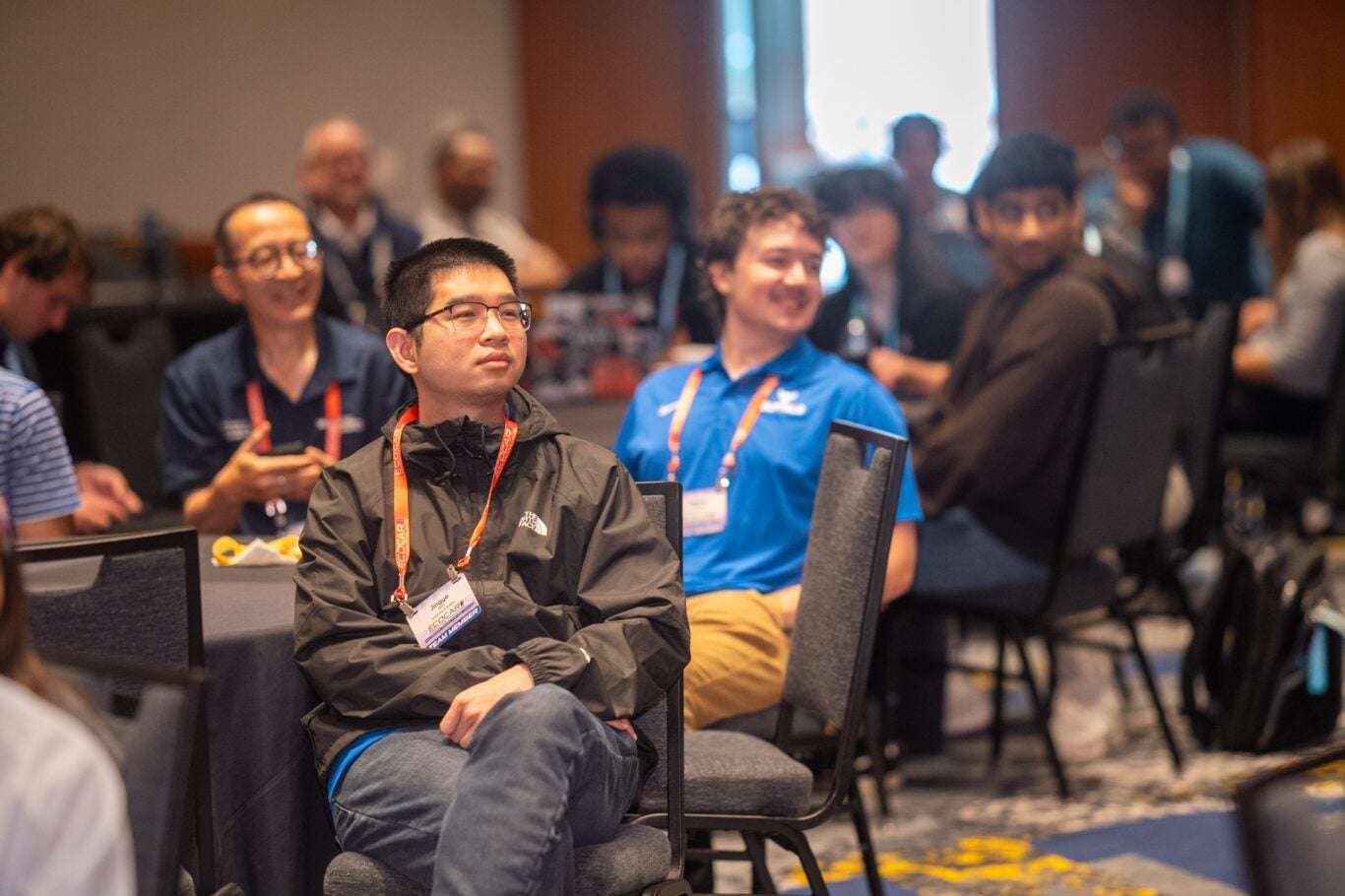
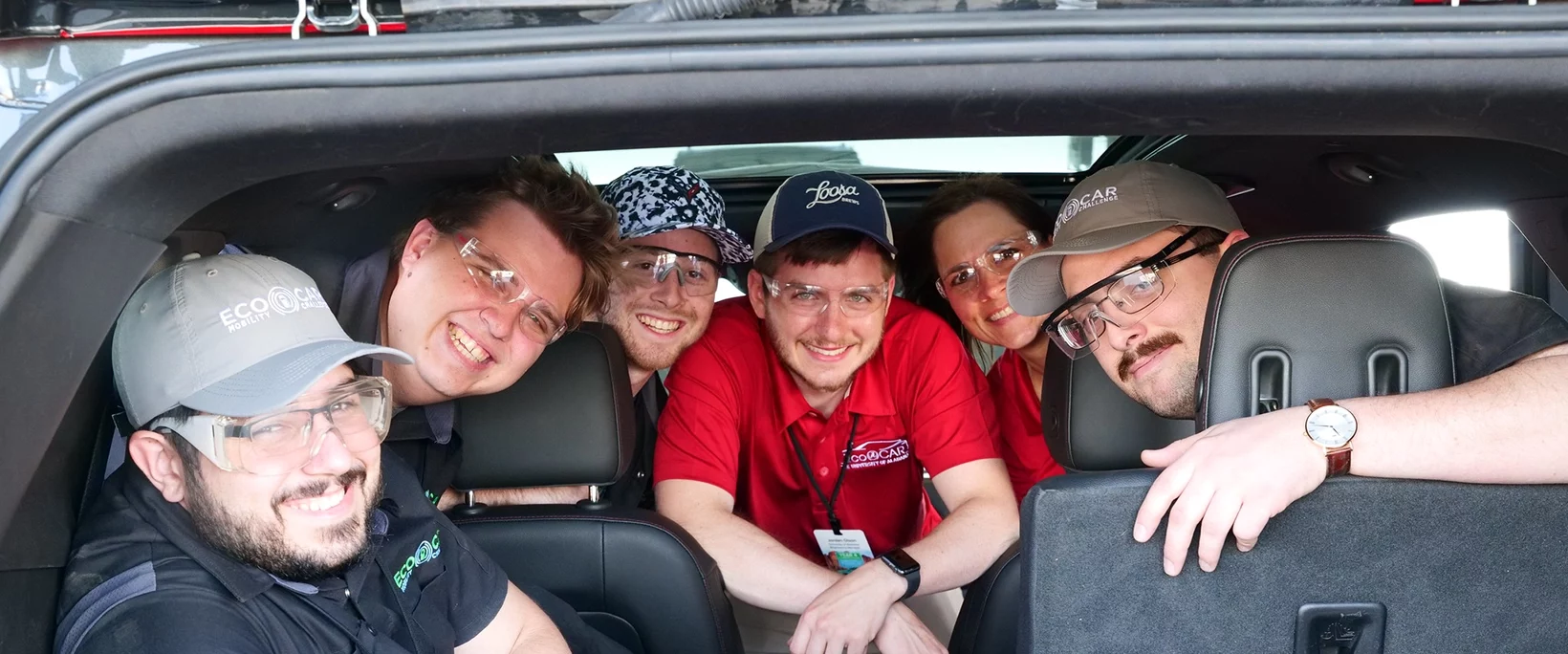
The UB EcoCAR Team thanks ABTC for investing in the next generation of engineers through the EcoCAR Innovation Challenge.
To learn more about ABTC’s technologies, visit americanbatterytechnology.com/technologies, and follow the UB EcoCAR Team on LinkedIn to keep up with our Year 1 progress.