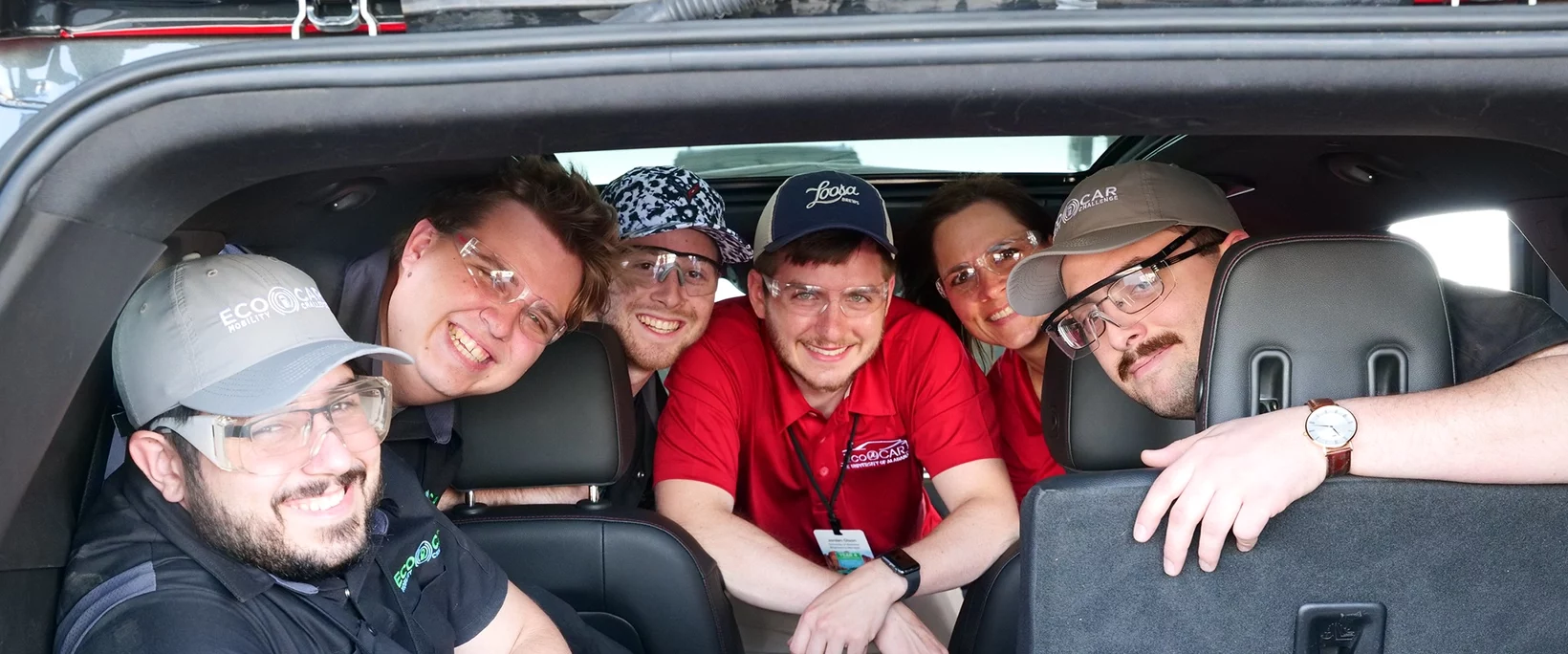
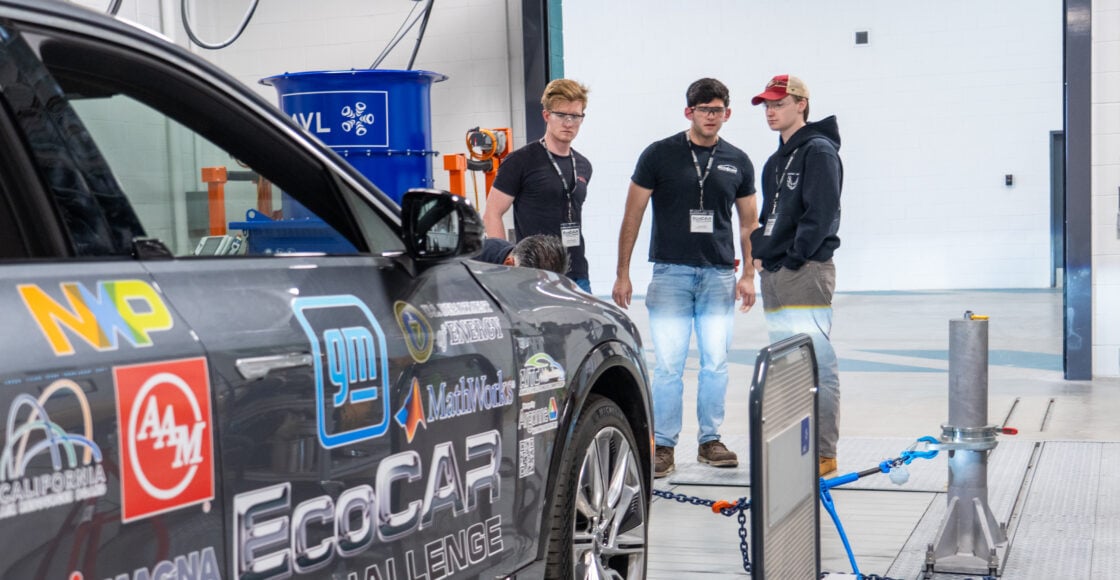
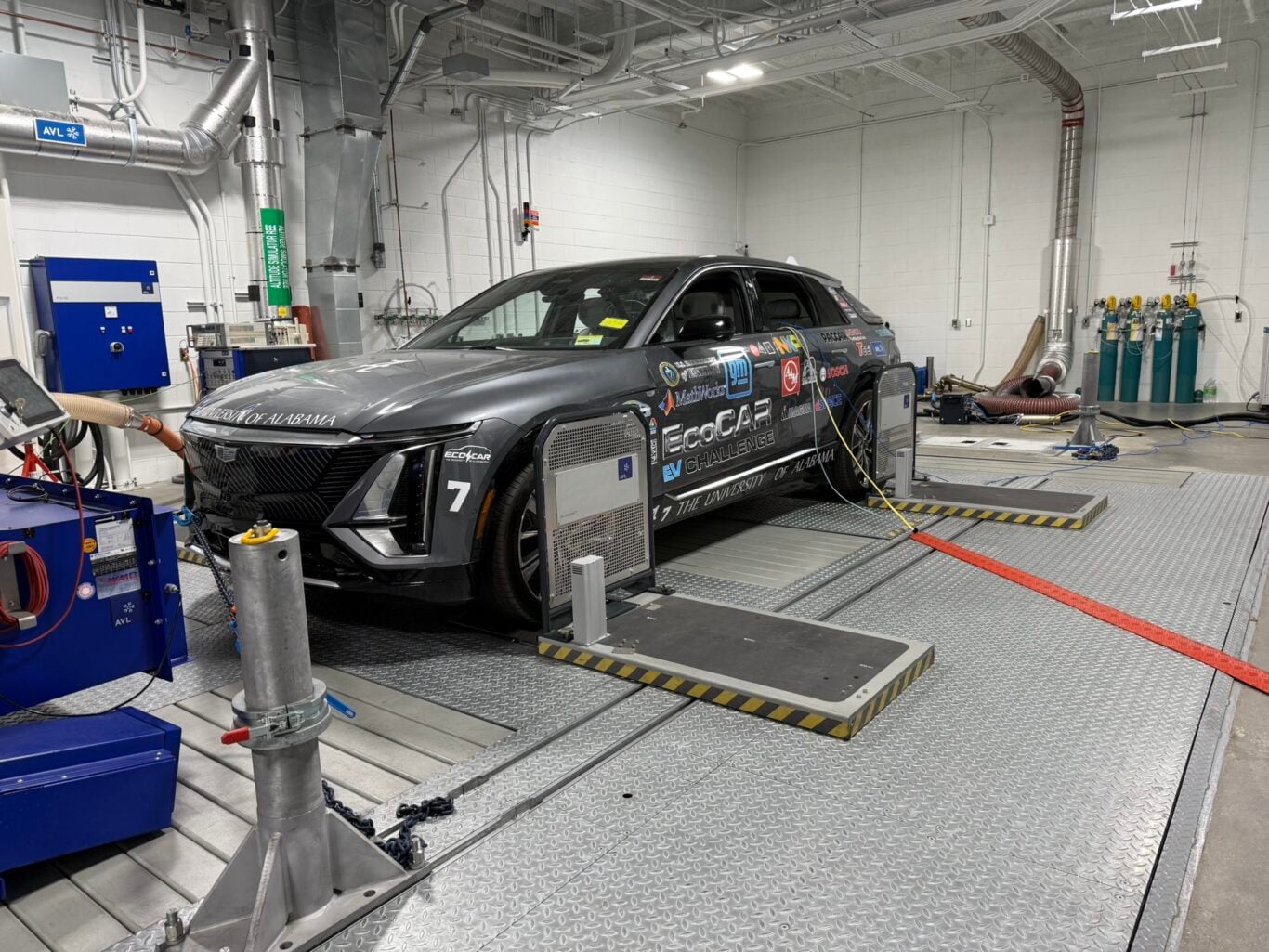
The University of Alabama EcoCAR team recently traveled to the EcoCAR Dynamometer Testing Event and participated in a series of vehicle assessments including the Thermal Derate Event, which evaluates how teams implement and manage critical thermal safety strategies within their vehicles. The event challenged teams to demonstrate their technical capability, preparedness, diagnostic discipline, and field mitigation performance.
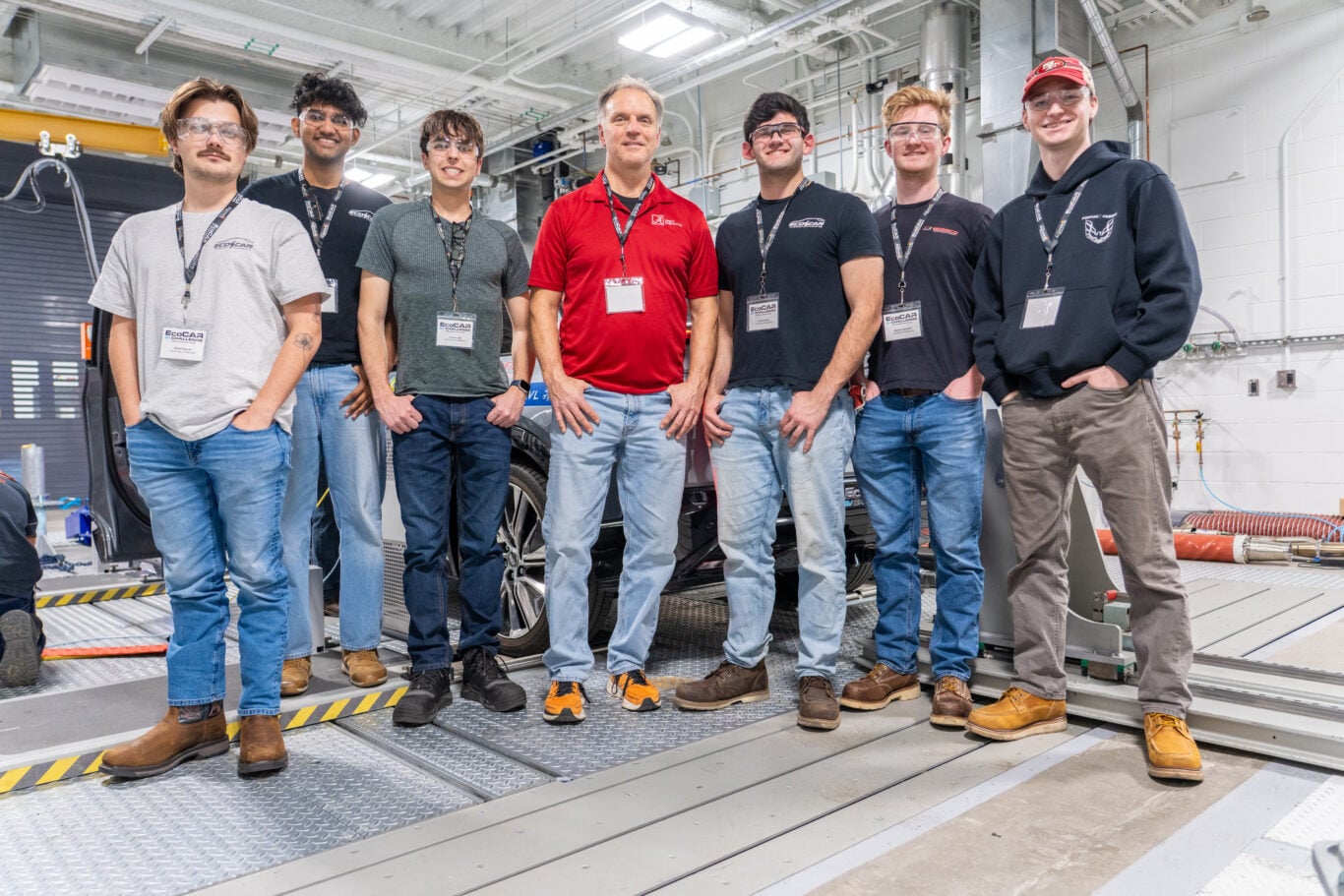
Engineering Manager, Ryan Douglas, explains, “We were assessed on our ability to properly detect hazardous thermal situations and convey that information to the driver, as well as on the actions we took to mitigate the damage that those hazardous situations can cause.”
The Thermal Derate Testing Event challenged teams to make controlled calibration changes to evaluate diagnostics and mitigation strategies during an overheating scenario without pushing hardware to its physical limits. In practice, the vehicle has one “knob” that can be turned to control motor temperature.
“If the temperatures of our motors start to get too high, the only way we can lower them is by requesting less torque from them, referred to as ‘derating our torque request,’” Douglas explained. “Our goal is to do this in a manner that is both effective and retains expected driving behavior to the best of our ability.”
The event marked a significant opportunity to evaluate one of the most critical safety features within the vehicle’s control architecture. Unsafe temperatures can cause irreparable component damage, and the team’s approach to mitigation has implications far beyond a single event. The framework developed for thermal diagnostics can be transferred to other safety systems, so the feedback received at the event will influence how future diagnostics are implemented across the vehicle.
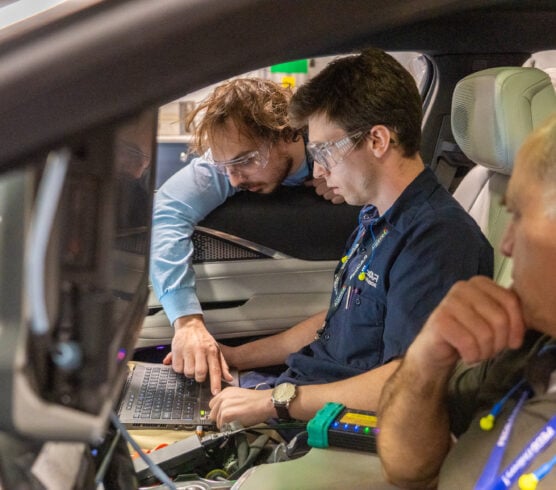
To prepare for the event, the team engaged deeply with the vehicle’s On-Board Diagnostics II (OBD2) system. Diagnostics are foundational in automotive engineering, and a major portion of preparation involved ensuring proper procedures were followed to indicate, resolve, and clear diagnostic trouble codes.
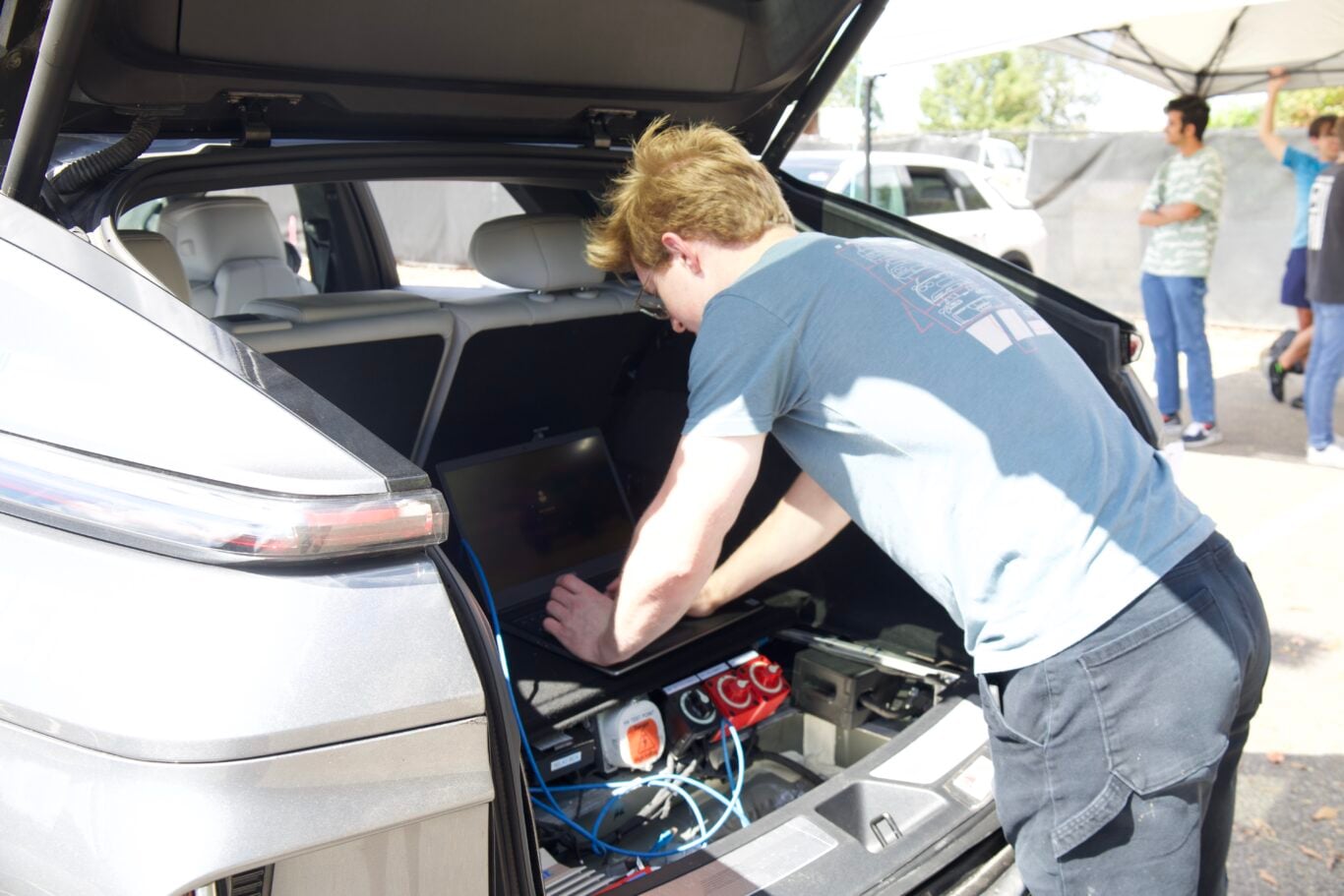
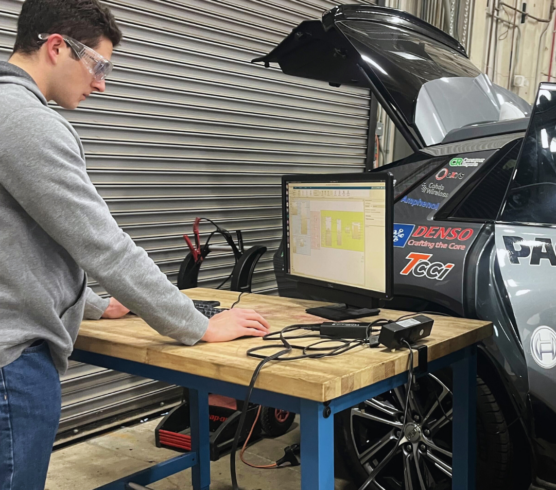
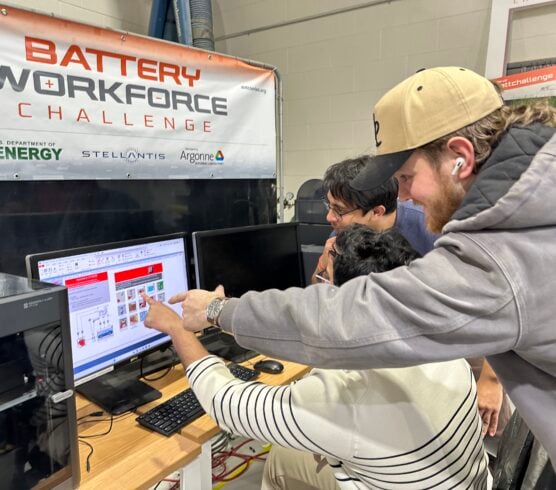
The team also spent time refining its calibration interface, ensuring it was thorough, intuitive, and interacted seamlessly with the vehicle’s controls. Much of this work was led by the Propulsion Controls and Modeling subteam, who developed the detection and mitigation strategies and prepared the calibration interface ultimately used during assessment. The Connected and Automated Vehicle subteam also supported this endeavor, implementing driver alerts by integrating thermal warnings into the team-added information display.
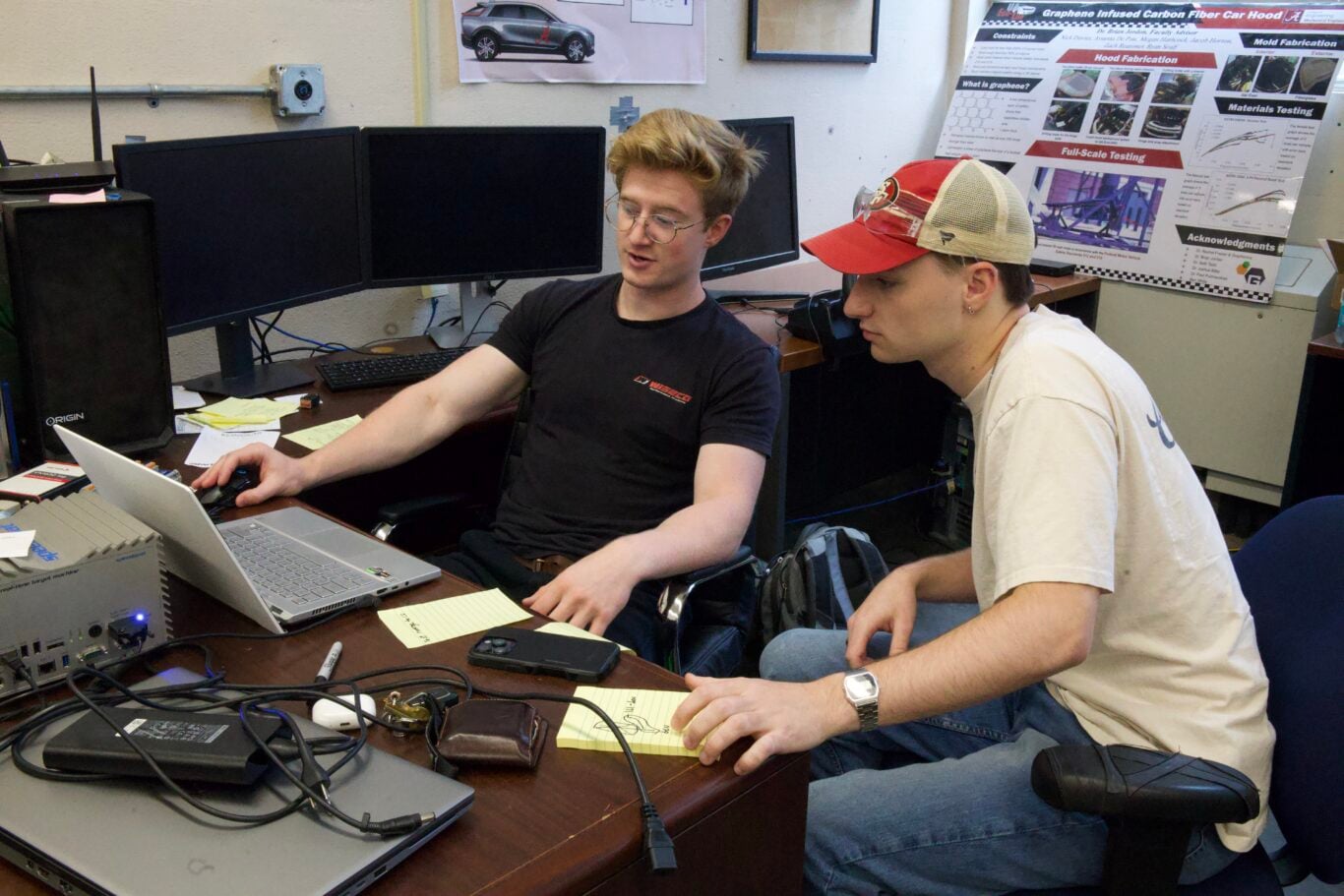
“The biggest priority for dyno testing is preparedness,” Douglas said. “We had a lot of different things we were trying to do for this event and not a lot of time to do them.”
During the Thermal Derate Event, members walked the event captain through their calibration interface before undergoing a comprehensive vehicle evaluation. On the dynamometer, motor temperatures were spoofed to simulate hazardous conditions, allowing the event captain to observe the team’s derating strategy in real time.
The team vehicle that performed the best in this event will be awarded the Thermal Excellence Award – Sponsored by TCCI, at the Year 4 Competition. TCCI’s involvement added an important industry perspective to the event.
As a company focused on thermal management solutions, the competition provides TCCI with an opportunity to engage with fellow sponsors and showcase its expertise in an electrified vehicle context. For the UA EcoCAR team, collaborating with industry professionals offered meaningful insight into industry expectations for thermal management and diagnostics. The partnership also allows TCCI to expand its visibility among engineering students who may become future employees.
“Our team learned a lot during this event, and having the opportunity to discuss these topics with industry experts is always extremely impactful for our understanding,” Douglas shared.
As the final year of the EV Challenge wraps up, the lessons learned during dyno testing will continue to shape how the team approaches safety, diagnostics, and control integration. The Thermal Derate Event tested and strengthened the systems and strategies necessary to carry the vehicle forward into the final stages of competition preparation.