Recently, student teams in the Battery Workforce Challenge gathered in the metro Detroit area for an important milestone in their journey – the Winter Workshop. While the work happening behind the scenes involves serious engineering, the big picture is easy to appreciate: these students are learning how to build safer, smarter, and more reliable battery systems.
Before the Workshop, teams had already been hard at work. They participated in a series of design reviews with competition organizers and industry sponsors, who helped guide them through the key parts of a high-voltage battery system. These reviews focused on major components like the battery module, battery disconnect unit (BDU), battery management system, and thermal system, all critical pieces that help a battery pack perform safely and efficiently.
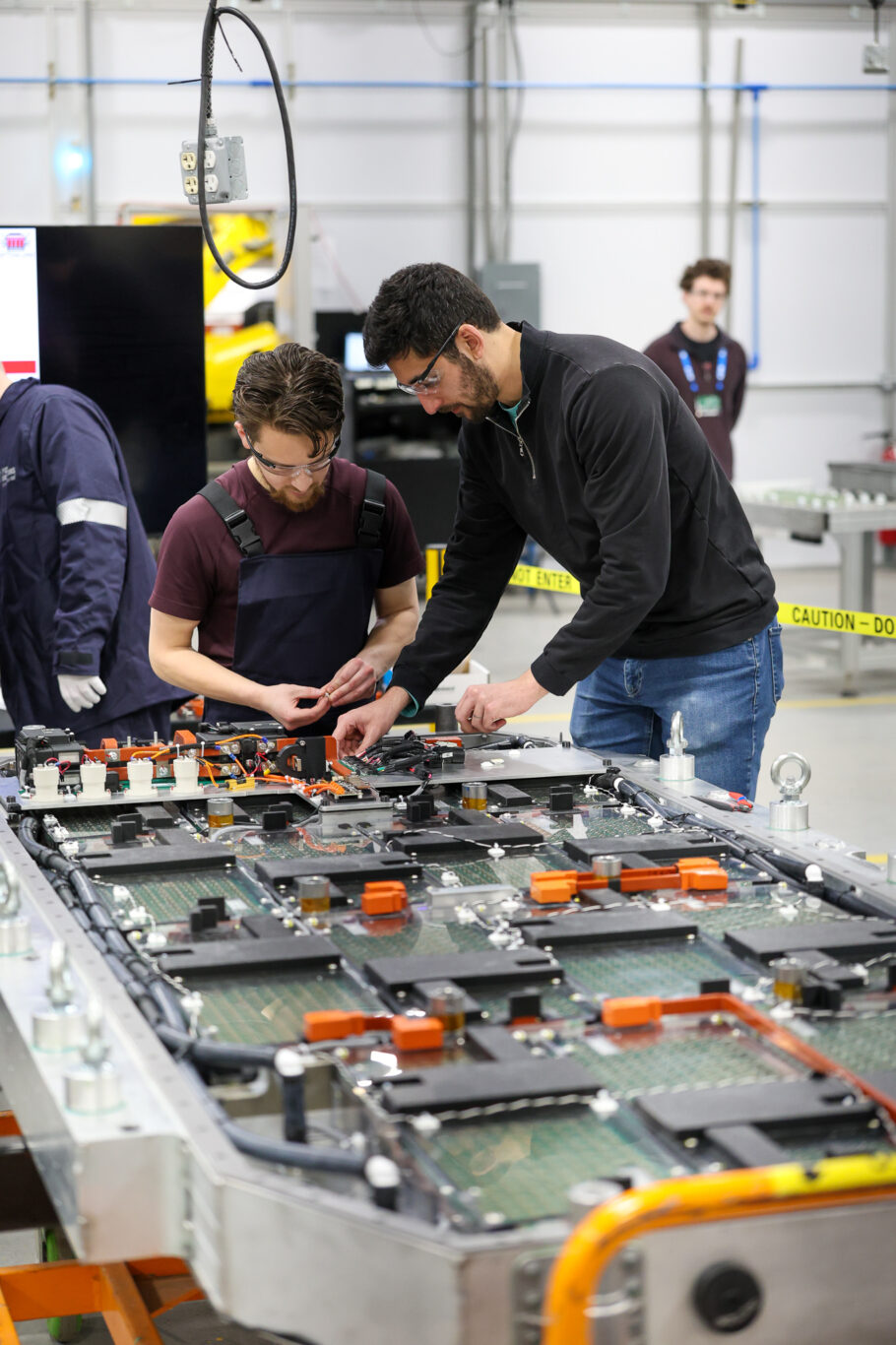
Industry partners played a major role in helping students raise their game.
- Eaton reviewed each team’s BDU design, sharing best practices used in industry for both design and manufacturing.
- Hesse Mechatronics supported teams on welding design and process, helping students think about both durability and how a part could realistically be built at scale.
- Dana worked with interested teams on cold plate design, an important part of battery cooling. Dana also carried out durability and end-of-line checks to help ensure those components could stand up to student use.
A few teams also completed vibration testing on their battery modules and BDUs using methods based on real-world industry standards, including UN38.3. That meant students weren’t just designing parts on paper they were testing whether those parts could hold up under demanding conditions.
At the Winter Workshop, all of that preparation came together in a detailed five-stage inspection process for the integrated battery packs and a Hardware-in-the-Loop demonstration for team-developed Battery Management System (BMS) Software.
A five-stage check-in for safety and readiness
In Stage 1, teams checked module voltages and isolation, while Eaton experts inspected the BDU using their professional experience and the competition’s design rules.
In Stage 2, judges from Stellantis, AVL, and Prime Energy CS reviewed how well the battery module, wiring, and thermal system were integrated. This stage focused on whether all the parts worked together the way they were intended to.
In Stage 3, teams tested the battery cooling system for leaks. First came an air leak test with guidance from Stellantis. Then Prime Energy CS performed a helium leak test to confirm there were no hidden coolant leak paths. Finally, coolant was run through the system so teams could visually verify that everything stayed sealed.
In Stage 4, the BDU was integrated with the rest of the battery pack, and inspectors checked that all electrical and mechanical interfaces were connected correctly.
In Stage 5, teams reached a major moment: bringing the battery pack up to full voltage.
That’s a big step—and one that required careful preparation.
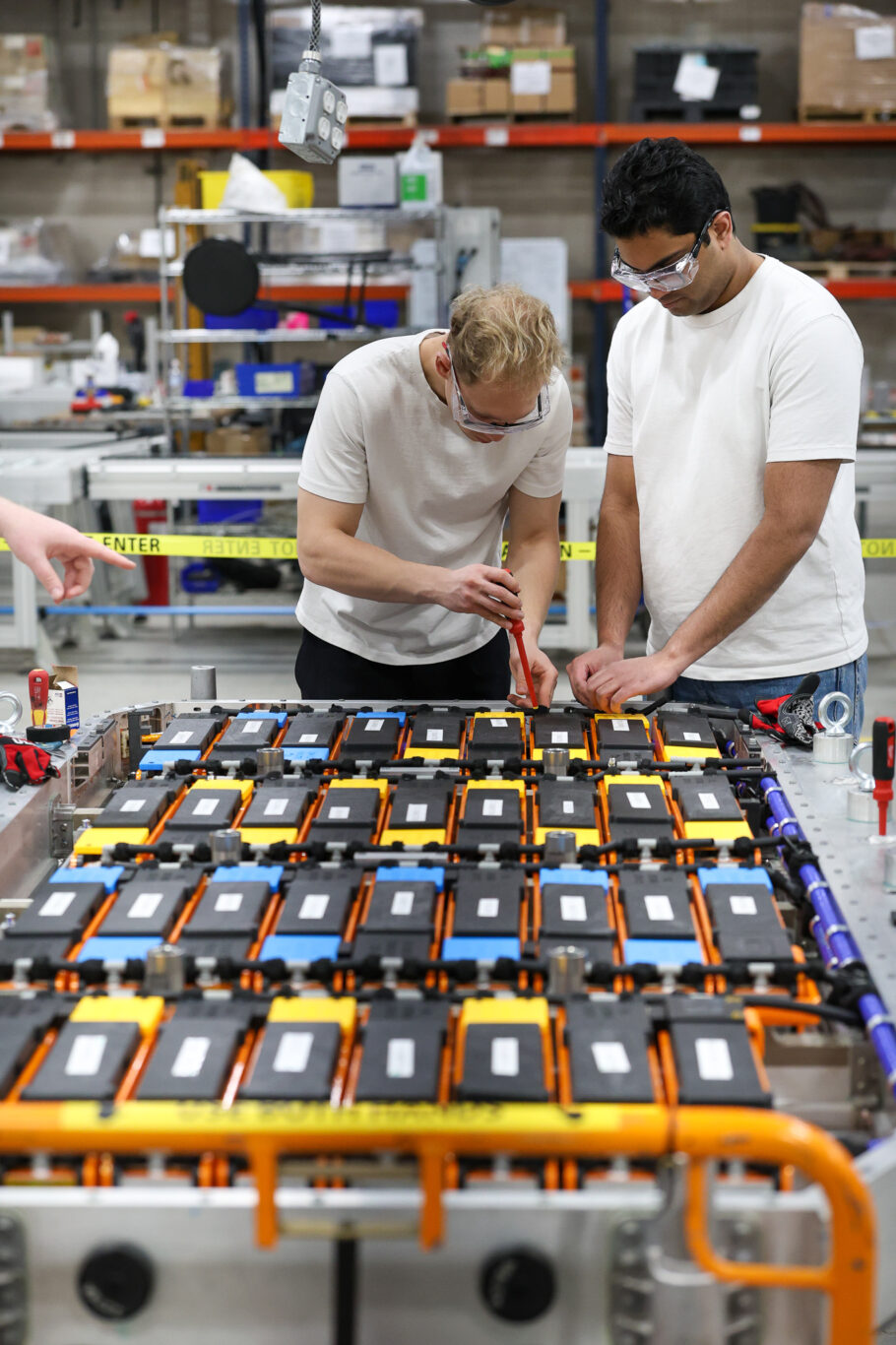
Hardware-in-the-Loop (HIL) Testing prior to Pack Integration
HIL testing is an industry standard method used to test prototype controllers in real-time under simulated environments to ensure functionality prior to integration with real hardware. The process is particularly important to BMS testing due to its safety critical nature and several diagnostic-heavy requirements that can’t be tested within a real battery pack or vehicle.
Through the week, several teams interacted with sponsors and organizers to collaboratively test, demonstrate, and iterate on their HIL setups. Teams demonstrated several impressive and creative methods to simulate pack and vehicle subsystems to showcase how their developed BMSs reacted to various operational and fault conditions prescribed by the competition. This was a critical step to ensure that team-developed software will be capable of operating safely within a real High Voltage Battery System.
Safety first, every step of the way
Prime Energy opened its doors for the entire Workshop to allow the students to work on their batteries, and throughout the workshop, teams followed strict high-voltage safety protocols. Students completed HV safety training provided by Stellantis, Legacy EV, and their own universities. They also used personal protective equipment sponsored by 70E Solutions.
As teams worked through their battery build books and connected their high-voltage packs, the systems were continuously monitored for isolation faults using the FMVSS305 method. So teams were checking to make sure the battery system remained safely isolated and met high safety expectations as voltage increased.
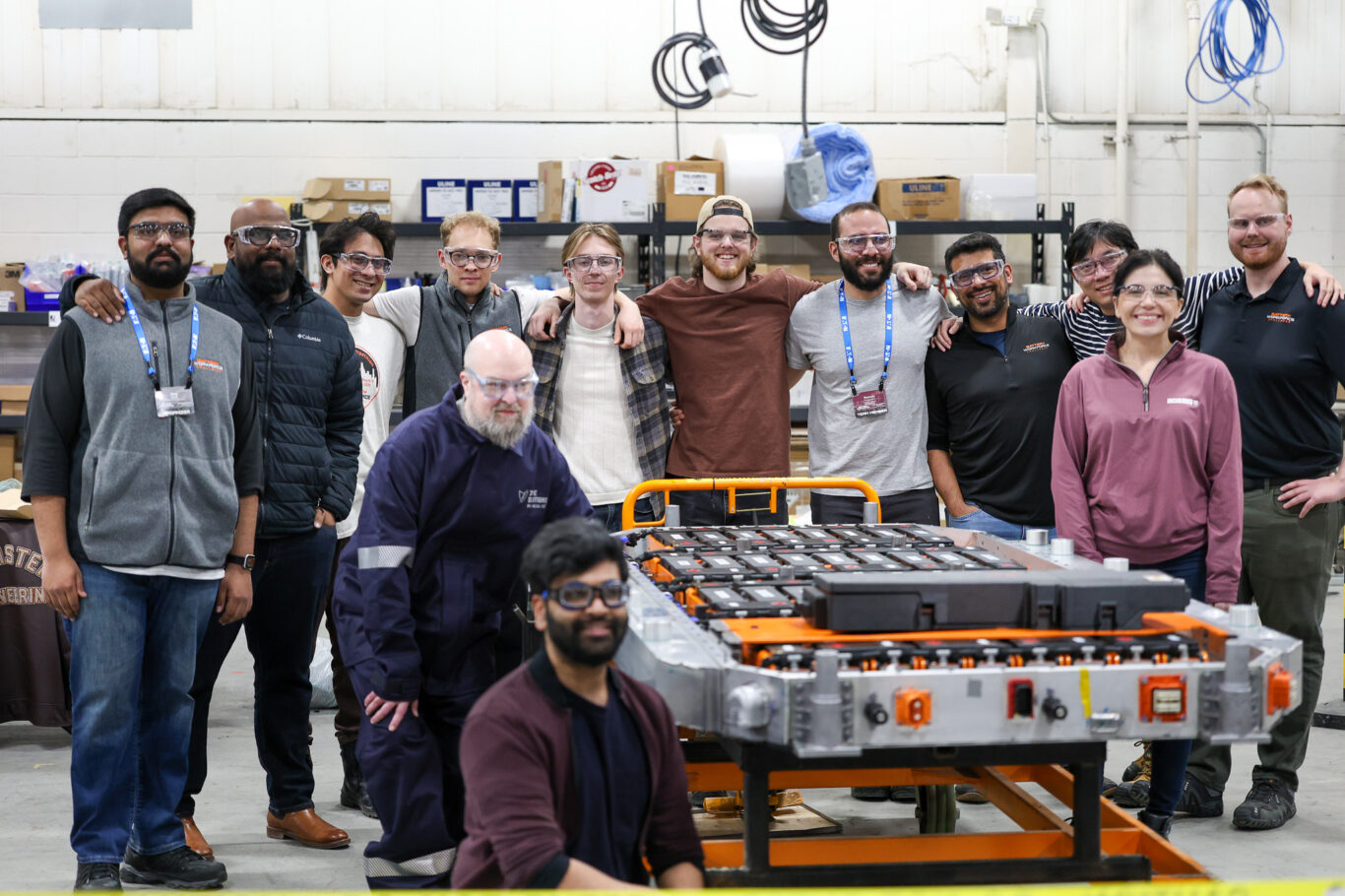
Additional Experiences
The Workshop offered the opportunity for Students to work side by side with industry leaders, applying professional tools, methods, and safety practices in a real-world setting. Every inspection, every test, and every review helped turn classroom knowledge into hands-on experience.
Beyond the workshop’s strong focus on safety, students also had the chance to connect classroom learning to the real world through experiences.
Thanks to headline sponsor, Stellantis, students had the opportunity to tour the Chrysler Technology Center’s brand-new High Voltage Battery Rework Lab that just had its grand opening in August of 2025. Teams got an up close look at the lab’s features, led by Benett Soundarraj, Lead Powertrain Test Engineer and Powertrain Operations Supervisor at Stellantis, who also happened to be an AVTC alum from the EcoCAR 1 Embry-Riddle team. Soundarraj told students he is where he is today because of AVTCs.
The Workshop also included a Sponsor Social dinner for the chance for students to build their network and learn about the different pathways into the battery field.
Events like the Winter Workshop offer a glimpse into how the next generation of engineers are being prepared for the battery workforce.
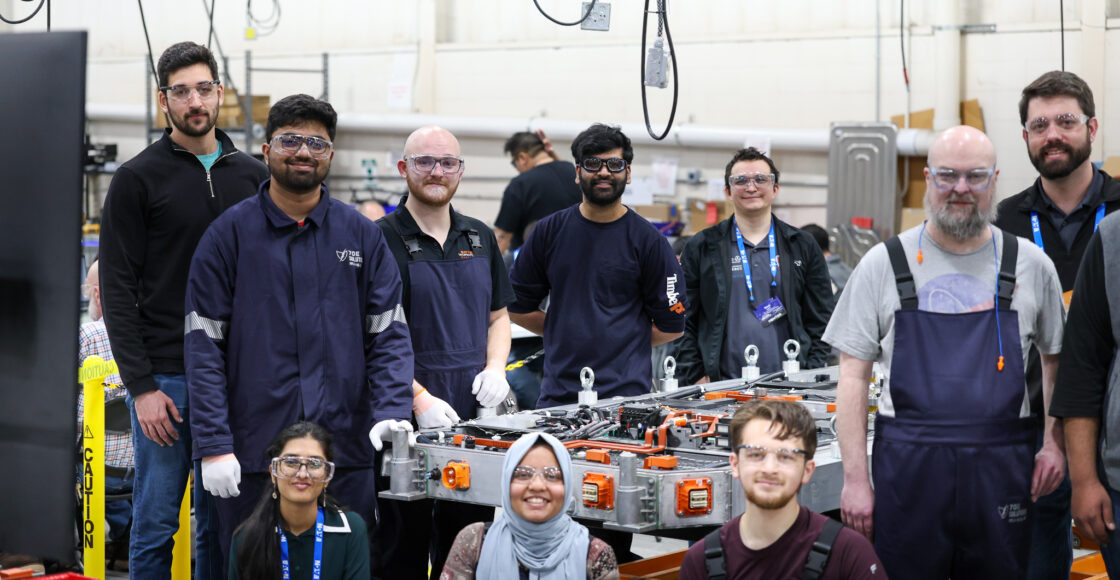
Note: The students in these pictures are working on a battery pack that does not have modules interconnected and no cell terminals exposed. The module voltages are less than 10V and no work is being done on cell interfaces. These students are only engaging with components on the chassis enclosure. Once the module terminals were exposed for bussing and 50V threshold is reached, students have been trained to wear electrical safety gloves and leather protectors as well as CAT4 PPE out of an abundance of caution.