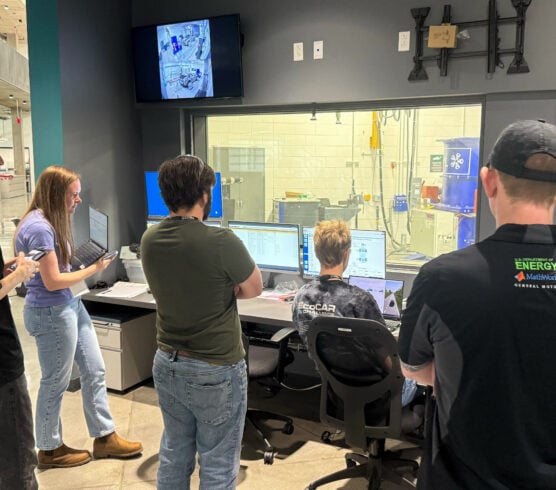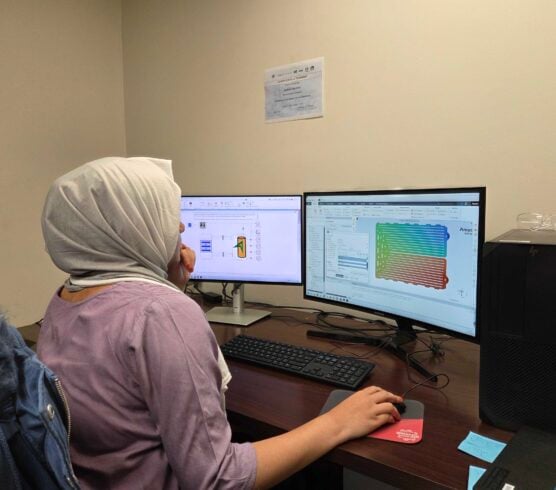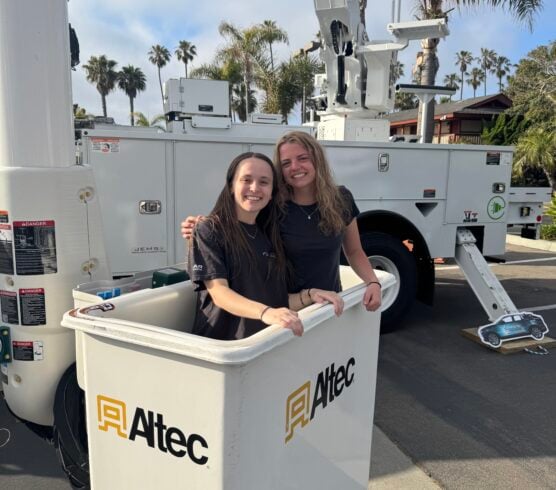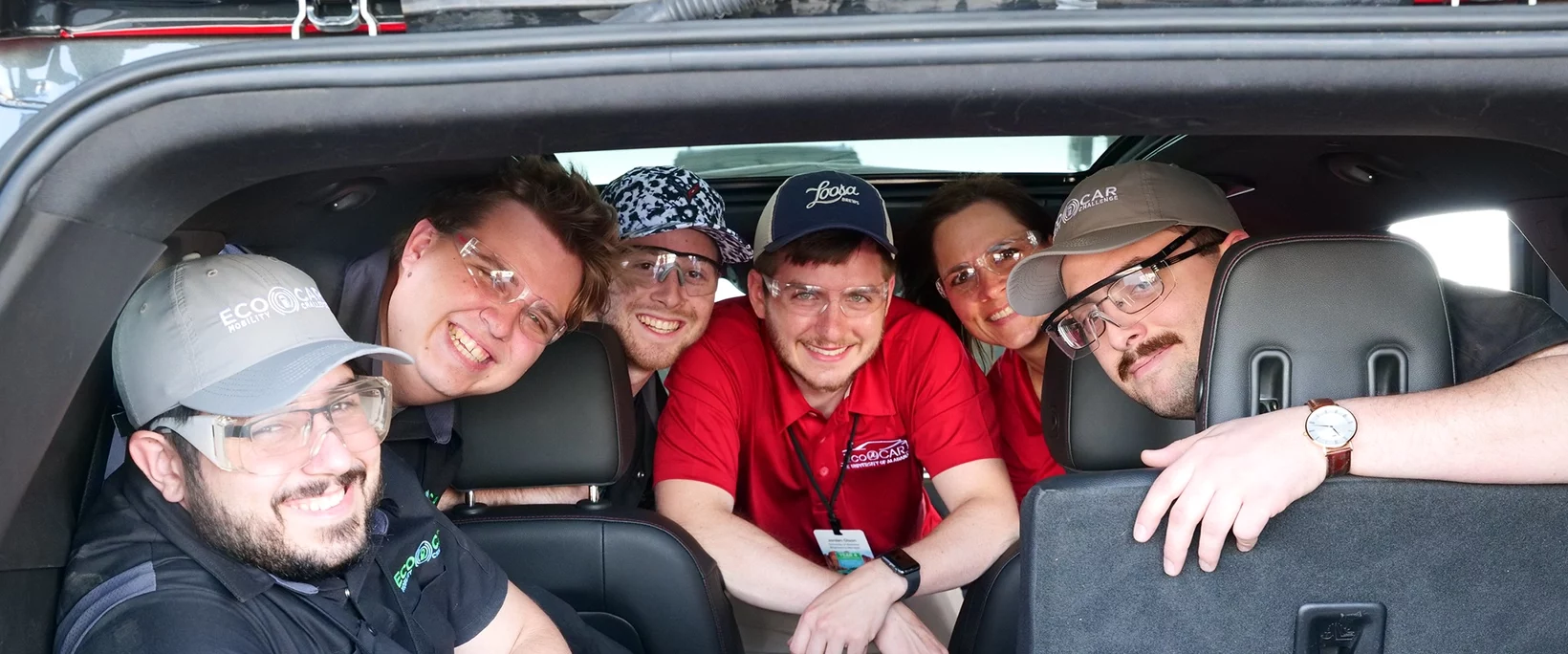
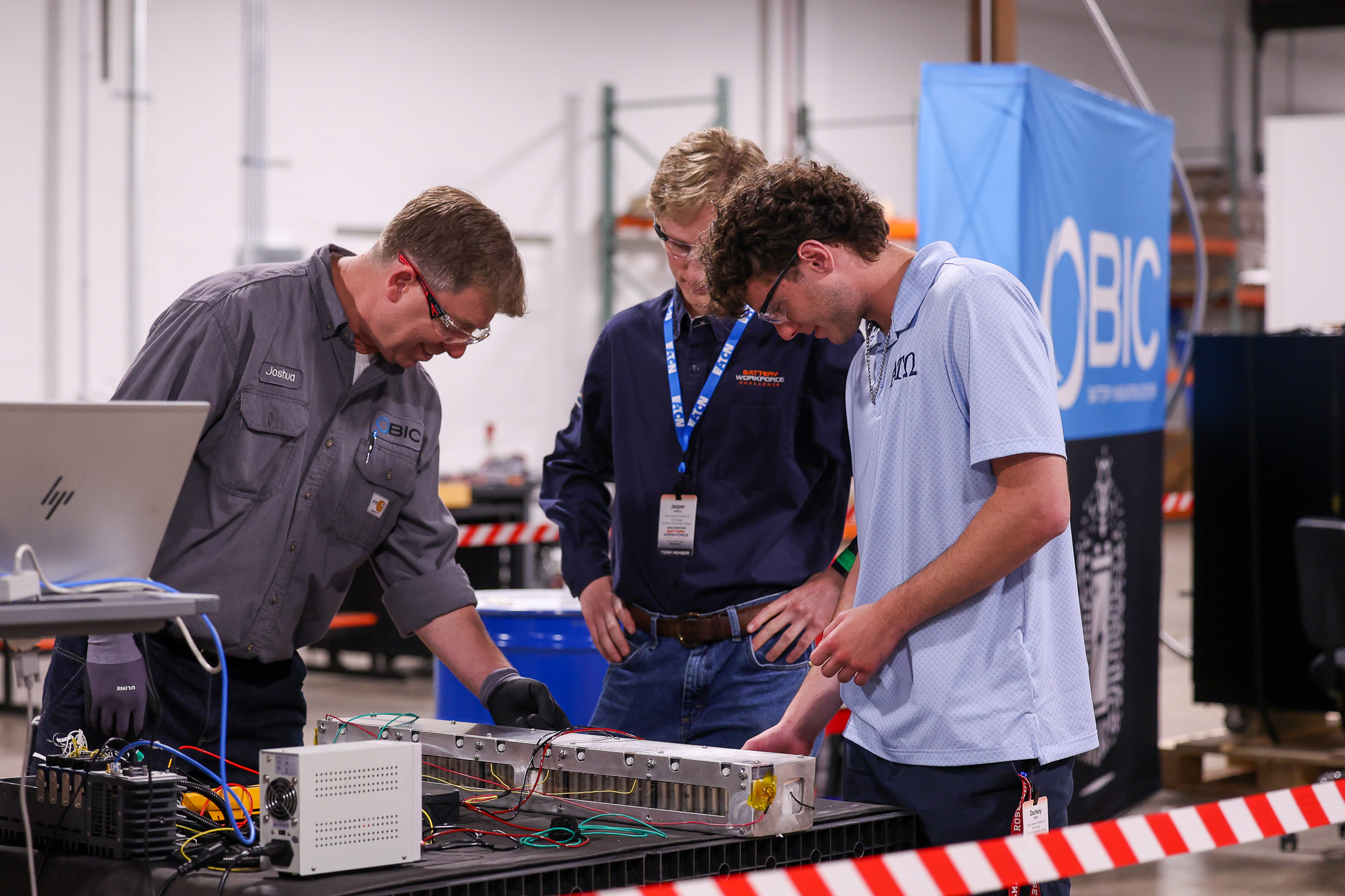
Behind every milestone our team reaches in the Battery Workforce Challenge is a complete network of industry partners helping turn the knowledge we’ve gained from Rose-Hulman and Ivy Tech into real-world experience.
This year, our progress has been reinforced by the collaboration with Stellantis and the Battery Innovation Center, whose facilities and experience have played a critical role in how we design, test, and implement battery design systems. Through our access to industry grade resources and the guidance from professionals, we are actively changing the automotive landscape and gaining vital insights that extend far beyond Battery Workforce Challenge.
The greatest benefit or preparation the can come out of the Battery Workforce Challenge is the lesson that one can rarely achieve a meaningful goal by waiting to be told the answer. You have to go out and get it. – Larry Prichard, Department Chair for Engineering, Electronics, and Computer Technology, Ivy Tech
Stellantis has provided mentorship and guidance as an OEM in the automotive industry, and that support has been incredibly valuable to our learning. Their feedback has helped us think more like industry engineers, not just students, by pushing us to justify decisions, consider real constraints, and communicate clearly in design reviews. Because of that, we have been able to develop professional skills, like technical communication, project planning, and cross functional collaboration, that we likely would not have developed otherwise. In addition to mentorship, Stellantis has also provided key resources that make this competition and hands-on experience possible. Those resources help us move from concepts to real hardware, and they reduce barriers that would otherwise limit what we can build and learn.
Students involved in the BWC are solving the same problems that industry engineers are currently solving. When I attend team meetings, I feel like I am sitting in an industry meeting rather than a classroom fabricated meeting or a senior project meeting. Students come prepared, we talk about challenges and how to overcome them and generate a plan. This is a real application of the engineering skills that we teach, not a faculty fabricated project that simulates a real project. – Marc Herniter, Professor Electrical and Computer Engineering Department, Rose-Hulman
The Battery Innovation Center has also provided a huge amount of knowledge on batteries, validation, and testing methods. Their support has helped us evaluate our design with more confidence, understand what data matters, and make meaningful testing possible so we can improve our pack based on evidence, not guesses.
Through our collaboration with Stellantis and the Battery Innovation Center, our team has experienced firsthand what it means to operate at an industry standard. Access to professional facilities, tools, and mentorship has transformed our learning from theoretical concepts into real engineering practice. These partnerships reinforce that the Battery Workforce Challenge is more than a competition; it is a launchpad into the EV workforce, where collaboration, initiative, and technical excellence drive meaningful progress. Stay connected with us as we continue leveraging our sponsor partnerships to push the boundaries of battery development.