Written by: Ryan Merritt
Artificial intelligence has rapidly become a driving force in engineering innovation, and within The Ohio State and Wilberforce University EcoCAR team, it’s reshaping how technical subteams collaborate, problem-solve, and accelerate development. From processing complex sensor data to supporting advanced modeling and communication workflows, AI is enabling students to work smarter, faster, and more creatively than ever before.
One of the most significant impacts has come from Notebook LM, which the team uses as a collaborative knowledge‑management and research assistant. With hundreds of technical documents, design reviews, and vehicle specifications spread across subteams, Notebook LM helps consolidate information and generate clear summaries, technical explanations, and cross‑team insights. For example, when team leads are working on conference papers for both graduate and funded position requirements, it allows a quick search for pertinent references and other technical insights from researchers online. This allows students to spend more time on analysis and testing and less time digging through PDFs.
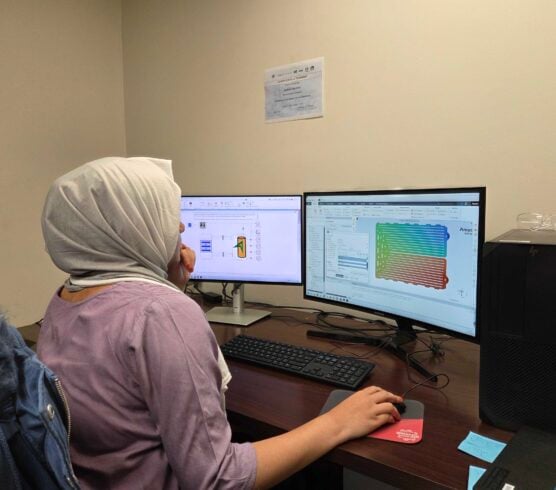
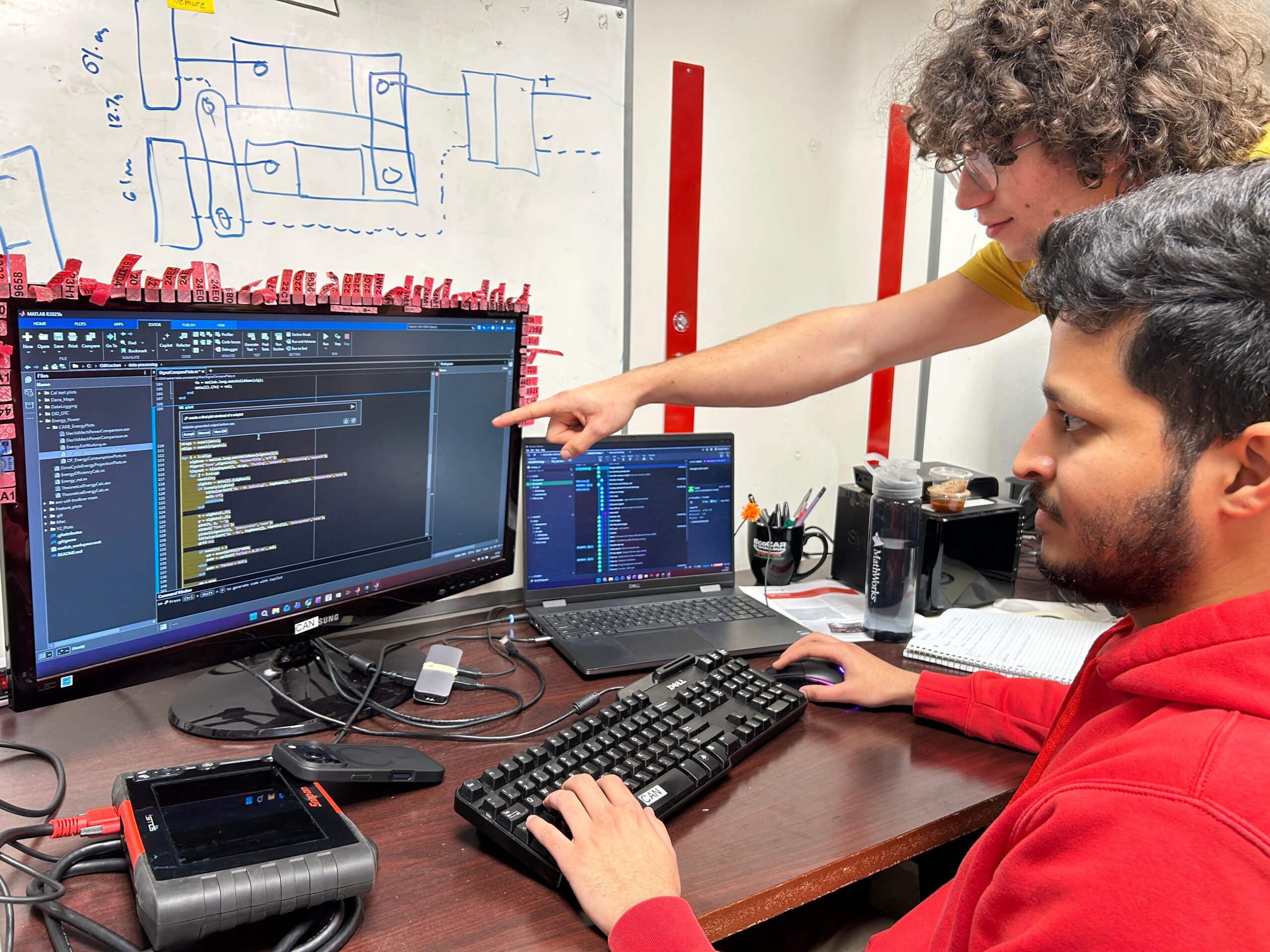
Meanwhile, the Propulsion Controls and Modeling teams have integrated Copilot in MATLAB, making their simulation and verification workflows more efficient. Copilot assists in writing scripts, debugging code, and even generating starter models based on natural‑language descriptions. Students who may be new to MATLAB can ramp up more quickly, while experienced team members use Copilot to rapidly evaluate alternative modeling approaches. The result is a more agile development cycle, with AI acting as a real‑time coding and problem‑solving partner.
The CAV (Connected and Automated Vehicle) subteam has also leaned heavily on AI, specifically for LiDAR interpretation and perception tasks. Traditionally, analyzing LiDAR point clouds can be computationally intensive and time‑consuming, especially when classifying objects or preparing data for simulation. AI‑based tools help automate segmentation, identify patterns, and generate cleaner datasets for perception algorithms, significantly accelerating testing and validation.
Across all subteams, AI has become more than a tool, it’s a collaborative teammate. As CAV Lead Pooja Tambolkar explains, “AI doesn’t replace the engineering process. It strengthens it. It helps us focus on innovation instead of repetitive tasks, and that ultimately makes our vehicle smarter and our team more effective.” By integrating AI into daily workflows, the Ohio State EcoCAR team is not only pushing the boundaries of advanced mobility but also preparing its students to become leaders in a rapidly evolving engineering landscape.
As EcoCAR continues shaping the future of intelligent transportation, we invite students, partners, and community members to join us on this journey. Whether you’re an aspiring engineer, a tech enthusiast, or someone who believes in a smarter future, there’s a place for you to get involved.
Follow our progress, engage with our events, and help drive the innovations that will power tomorrow’s transportation systems.